
 Available in US
F1 Power Unit Manufacturers Betting: Mercedes, Ferrari, Honda, Audi and the 2026 Battle
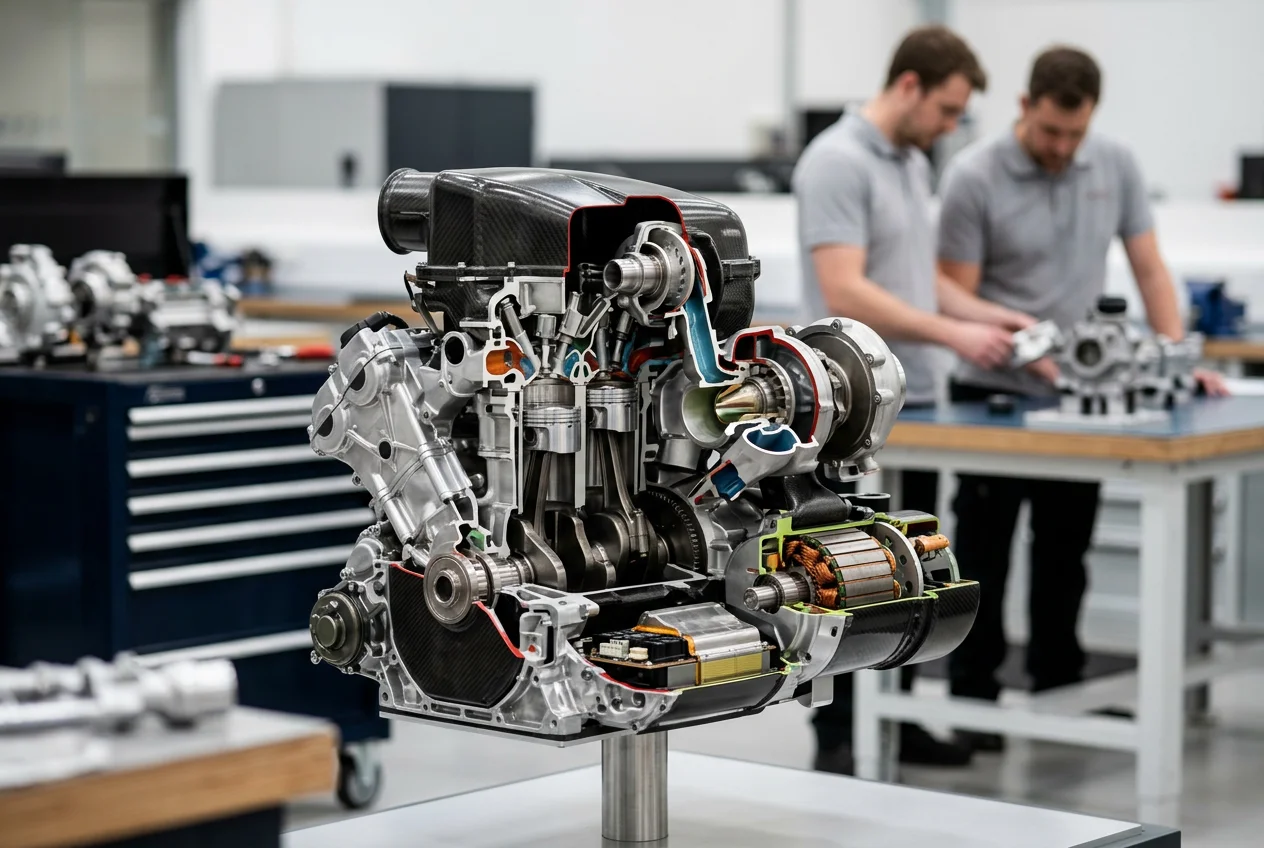
The first four-way OEM fight in a decade
I remember watching the 2014 season opener in Australia and realising halfway through the race that I’d just witnessed a manufacturer war played out at racing speed. Mercedes had spent two years preparing for the hybrid regulations and the rest of the grid spent the next four seasons catching up. The 2026 season is shaping into the same kind of setup, except this time it’s four manufacturers fighting for the same engineering lead, and the betting markets are scrambling to price a landscape that hasn’t existed in F1 for over a decade.
The 2026 grid has four active power unit manufacturers — Ferrari, Mercedes, the Red Bull Powertrains and Ford partnership, and Audi — with Honda returning to the grid via Aston Martin. That’s the most diverse PU landscape since the early 2010s, and it creates a betting category that until recently barely existed: the manufacturer-level F1 market.
UK operators have responded by offering what amounts to a pseudo-market around manufacturer performance. The lines are sometimes overt — “best power unit manufacturer this season” — and sometimes implicit, embedded in team-level pricing that’s really a power unit derivative. Either way, the four-way OEM fight is the structural story of the 2026 season, and reading it through the lens of manufacturers rather than teams produces a different set of pricing observations.
See also: f1 bet for engine and team performance analysis.
The Mercedes 2014 precedent and what it should teach us
The single most useful historical analogue for the 2026 manufacturer battle is the 2014 V6 hybrid introduction, and the dominant lesson is brutal. The manufacturer that invests earliest and most aggressively in the new power unit specification wins the first two or three seasons, and the gap doesn’t close quickly. Mercedes took 2014 through 2020 inclusive on the back of an engineering head start that became a structural advantage.
The betting implication for 2026 is that the manufacturer that emerges fastest from the opening rounds is likely to be the manufacturer that retains dominance for the entire regulatory cycle. The opening five races of 2026 will produce a ranking of the four PU suppliers that is unlikely to reshuffle meaningfully across the next three to five seasons unless one of them produces a major mid-cycle development that the others can’t match.
That structural lock-in matters for ante-post staking. A constructors’ title position taken in May 2026 on the team running the strongest power unit is potentially also a positive expected value position in 2027, 2028, and even 2029. The books don’t price multi-year positions directly, but the principle informs how I’d size 2026 constructors’ positions: relatively large, because the variance is unusually contained by the structural advantages the early-leading manufacturer would acquire.
The fade side of the same logic applies to the pre-season favourites whose PU may not deliver. A team priced as a championship contender pre-season because of their driver lineup and chassis pedigree, but partnered with a manufacturer whose 2026 PU is genuinely unknown, carries pricing risk that the books may not fully reflect. Those teams are the structural fade in the early-season ante-post market.
Honda’s return and the Aston Martin question
Honda’s return to F1 via Aston Martin for 2026 is the most asymmetric story in the manufacturer landscape, and it produces some of the most genuinely difficult pricing decisions. Honda has F1 power unit pedigree from their previous partnership with Red Bull through 2021, including the championship-winning seasons that followed. But the 2026 regulations are different enough from that previous era that the historical pedigree doesn’t transfer cleanly.
The Aston Martin chassis pedigree under their current technical leadership has been steadily improving, but the team has never won a constructors’ title and has finished a season top-three only in unusual circumstances. The combination of an experienced PU manufacturer with a chassis team that’s still scaling produces a wide range of plausible 2026 outcomes — from championship contention down to mid-grid stability.
The betting reflection of that uncertainty is wide pricing on Aston Martin in both the drivers’ and constructors’ markets. Ante-post constructors’ lines on Aston Martin for 2026 range from 8/1 to 20/1 across UK operators, which is among the widest dispersions on the entire ante-post market. That dispersion is the line-shopping opportunity. The 5-to-15 percent typical F1 market spread sits at the upper end for Aston Martin specifically, because operators differ on how much weight to give Honda’s return versus the chassis team’s recent form.
The structural read I’d take is that Honda’s PU is genuinely capable, but the chassis-PU integration challenge for any new partnership is non-trivial. The first half of 2026 is likely to produce reliability issues for Aston Martin that aren’t structural to the long-term competitiveness of the package. Backing Aston Martin for points-finishes early in the season is risky; backing them for podium finishes in the second half of the season at the same opening prices may be where the underlying value sits.
Audi as the genuine newcomer and what that means for staking
Audi’s entry into F1 for 2026 is the cleanest “new entrant” scenario the sport has seen in years. The team is being built largely from scratch — albeit on the foundation of the Sauber operation — with a manufacturer that has decades of motorsport pedigree but no prior F1 power unit experience. The combination is genuinely unprecedented in the modern era.
The historical record for first-year manufacturer entries is brutal. The first full season of any new PU manufacturer has, across the last 30 years of F1, almost always been a learning year with limited competitive results. The exception was Mercedes in 2010, but that was effectively a rebranding of an existing operation rather than a clean new entry. Audi’s 2026 has no such advantage.
The betting implication is conservative on Audi specifically. Ante-post constructors’ positions on Audi at the longer prices on offer are entertaining longshots, but they’re not high-probability positions. The more interesting market on Audi is the lap-1 reliability and first-five-races points-finish lines, where the implied probability often understates how steep the first-year learning curve typically is. Backing the “no points in first three races” market on Audi at the opening prices has been one of my pre-season 2026 positions, sized small to reflect the variance.
The longer-horizon view is more optimistic. Audi has signalled a multi-year commitment, with engineering investment that suggests they’re building for 2028 and beyond rather than 2026. Ante-post positions on Audi for 2027 or 2028, if such markets exist, are worth more careful consideration than the 2026 lines suggest.
The longer horizon and what GM 2029 means
The General Motors entry into F1 power unit supply is scheduled for 2029, with the team itself entering the grid in 2026 using a Ferrari power unit in the interim. That’s a structural commitment that adds a fifth credible manufacturer to the longer-term landscape, but it doesn’t affect the 2026 betting picture directly.
What it does affect is the ante-post pricing of any GM-related team across the 2026-2028 seasons, because the books recognise that 2029 brings a major engineering pivot. Teams running GM badges during the interim period are likely to be priced with some weight given to the longer-horizon plan, even if their current performance reflects the interim arrangement.
For UK punters, the practical implication is small. The 2026 season is the season to bet on, and the longer-horizon GM picture doesn’t materially change my staking on individual 2026 markets. But anyone taking ante-post positions on multi-season title positions — where they’re offered — should weight the GM 2029 entry as a meaningful background factor in any 2028 constructors’ line.
The four-way PU battle in 2026 also produces secondary effects in the reliability and DNF markets, which is the natural extension of any new-power-unit season. The relationship between manufacturer performance and first-retirement and DNF market pricing in a reset season is the closely related subject for anyone trading the early rounds.
See also: engine advantage feeds directly into the constructors’ championship betting odds.
Manufacturer-level betting questions
Is there a direct best engine betting market in UK?
Some UK operators offer a "best power unit manufacturer this season" market, particularly during reset years like 2026. The market settles on which manufacturer produces the highest combined points across all its supplied teams in the constructors" standings. Pricing tends to be wider than on individual constructors" lines because the manufacturer-level data is harder to model. Not every operator offers the market, so line shopping is mandatory for anyone interested in taking a manufacturer-level position.
How quickly did Mercedes dominate after the 2014 hybrid intro?
Mercedes won 16 of 19 races in the opening 2014 season and took both world championships by significant margins. Their dominance extended through 2020, with seven consecutive constructors" titles. The pattern matters for 2026 betting because it illustrates how a regulation reset can produce structural manufacturer advantages that don"t close quickly. The leading manufacturer of the opening 2026 season is statistically likely to remain the leading manufacturer for at least three seasons.
