
 Available in US
F1 2026 Regulations: How the New Rules Will Reshape Betting Markets
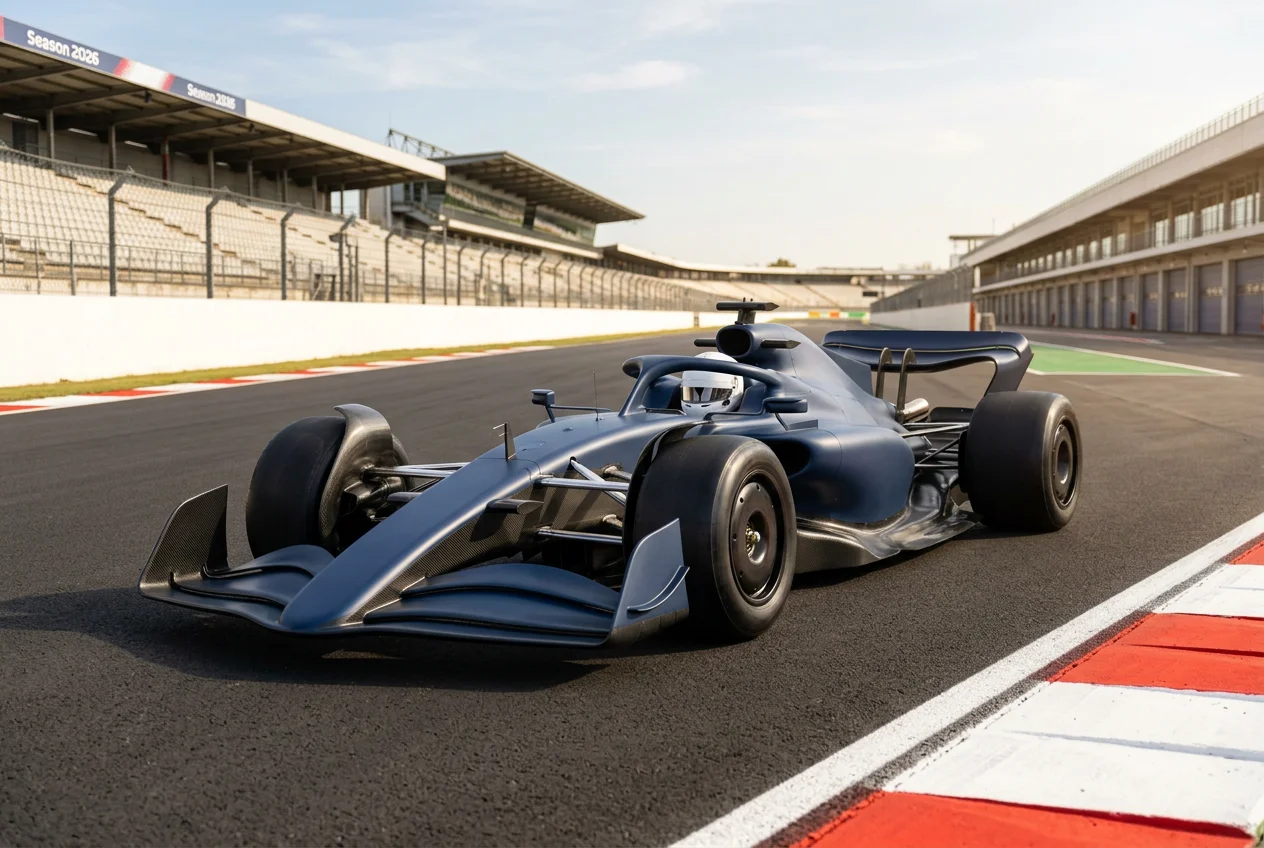
The Most Radical Reset in a Decade
Frédéric Vasseur put it bluntly to Sky in March: “The biggest challenge is probably that we are starting from scratch on everything — new tyres, new fuel, new engine, new chassis, new sporting regulations — new everything. It’s quite challenging.” That is the team principal of Ferrari describing the 2026 season opener as a clean-sheet engineering problem. Read it again. There is no diplomatic hedging in that sentence. There is a man with one of the largest budgets in the sport admitting that nobody knows where the pace is going to land.
For a UK punter, that admission is the whole story. The 2026 Formula 1 regulations are the most comprehensive technical reset since the hybrid era began in 2014. Power units, chassis, aerodynamics, tyres, and a sizeable chunk of the sporting regulations all change at the same time. Every car on the grid at Bahrain in March will be a first-iteration design with limited correlation to last year’s form. Every model that bookmakers use to price the championship has been retrained on extrapolations rather than on data. Every assumption about the relative strength of the top four constructors is provisional.
What that means for the market is wide bid-ask spreads, unstable head-to-head pricing, and a championship board that re-orders violently between rounds one and five. It also means that the punter who can correctly read the technical implications of the rule changes — and translate them into pricing predictions ahead of the operators’ models — has the rarest kind of edge available in this sport: an information edge that does not decay within a single weekend. This article walks through what changes, what it means for each major market, and where the price volatility is going to sit.
I have placed F1 bets through three previous regulation resets — 2009 (the slick-tyre and double-diffuser year), 2014 (the dawn of the hybrid era), and 2022 (ground-effect aero return). In every one of those resets, the front of the grid re-ordered in ways that pre-season pricing did not predict. Mercedes’ eight-year dominance from 2014 is the textbook case, but the more interesting story is what happened to the middle and back of the field, where overrounds widened by 8% to 12% and stayed wide for half the season. 2026 carries the same DNA. The next eight sections describe each technical change and what it does to the market.
See also: f1 bet for pre-race and in-play resources.
Power Unit Changes
Picture a car that derives exactly half its peak power from electrons and half from petrol. That is the 2026 Formula 1 power unit, and it is the single largest engineering shift the sport has put through in two decades. The 2026 PU regulations mandate a 50/50 split between internal combustion engine and electrical output, with the MGU-K (the motor-generator that recovers kinetic energy under braking) increased from 120 kW to 350 kW. That is roughly 469 horsepower from the electrical side alone, more than three times its current contribution.
What 50/50 Actually Means
The numbers translate into a power unit that can deliver something close to 1 000 horsepower total under peak deployment, but with a fundamentally different shape of power delivery. Under acceleration out of a slow corner, the car will be electric-led — the MGU-K is the dominant power source until speed climbs and the ICE takes over. Under braking, the same MGU-K is harvesting at higher rates. The MGU-H — the secondary motor-generator that previously recovered exhaust-driven energy and helped manage turbo lag — has been removed entirely. Total recoverable energy per lap doubles to 8.5 megajoules.
The Four-Manufacturer Battle
2026 has four active power unit manufacturers competing on the grid. Ferrari, Mercedes, Red Bull Powertrains in partnership with Ford, and Audi — with Honda returning to support a major customer team after a multi-year absence. General Motors is scheduled to enter with its own PU in 2029. The number matters because in 2014, when the last major PU regulation reset arrived, Mercedes’ early performance lead translated into a championship grip that lasted until 2021. The risk for every UK punter who bets long-term outrights is that one of these four manufacturers gets the formula right in the first six months and the others spend the year catching up.
Implications for the Constructors’ Market
The constructors’ championship is the market most directly exposed to PU performance. A team with a 30 kW deficit at the 2026 spec is not running mid-grid — it is losing 1.2 to 1.5 seconds per lap, which in F1 terms means starting the season fighting for points rather than podiums. Pre-season constructors’ prices have compressed substantially compared to 2025, with three or four teams within 4/1 of the favourite, because nobody — including the operators — can credibly call which PU lands at the top of the dyno chart. My read on the volatility: the constructors’ market will be the slowest to settle, with the meaningful price separation happening only after the third European round.
Implications for the Drivers’ Market
Driver-specific impact is more subtle. A driver in the best PU starts every race weekend with a 0.6-second advantage that has nothing to do with their own skill. Their head-to-head prices against drivers in inferior PUs become structurally short, and the price compression at the front of the drivers’ championship board reflects exactly this — three or four drivers at sub-5/1 in pre-season, instead of the usual one or two. The interesting bets in 2026 are the mid-pack drivers whose PU situations are stronger than the public-perception narrative implies.
Chassis and Aero Changes
Downforce reduced by 30%. Drag reduced by 55%. Those two numbers, taken from the 2026 technical regulations, describe a car that grips less in the corners and slips more on the straights than its 2025 predecessor. The combination is intentional — F1 wanted cars that could close gaps on the straights to enable more overtaking, while delivering the cleaner aero needed for the hybrid PU to work efficiently. The side effect, for a betting market, is dramatic.
Active Aero and the New Wing Logic
2026 cars feature active aerodynamic surfaces — front and rear wings that can change configuration during a lap, transitioning from a high-downforce setup for corners to a low-drag setup on straights. The MGU-K Override (covered in the next section) interacts with this aero system: the car deploying full electrical boost is simultaneously trimming its aero for minimum drag. The interaction is the cleverest part of the new regulations and the most difficult to model. Operator pricing engines that handle most sports through pure historical-pattern matching have no way to extrapolate active aero behaviour from 2025 data. They are guessing, and they know it.
Braking Zones and Overtaking Geometry
Less downforce means longer braking zones — the car cannot bleed speed as efficiently into a corner without aerodynamic grip on the floor. Less drag means higher straight-line speed before the brakes are applied. Together they reshape the geometry of every overtaking opportunity on every circuit. Braking zones are longer, overtake initiation points are earlier, and the closing speed difference between an attacker and a defender is wider. Markets affected: head-to-head betting (more overtakes mean more grid-position changes during races), points-finish betting (fewer cars stuck in DRS trains, more genuine racing through the field), and winning margin (more variance in the gap at the chequered flag).
Safety Car Probability
The combination of longer braking zones and unfamiliar aero handling at high speed should increase the probability of incident — drivers exceeding the edge of grip more often, particularly in the first three rounds while they learn the cars. Singapore historically deploys a safety car in 100% of its races, Monaco around 70%, and Bahrain about 14%. Those percentages were measured under the previous aero regime. My expectation is that the 2026 baseline shifts higher on every circuit by 5 to 15 percentage points for the first half-season — and that the yes/no safety car market, particularly on circuits where it has historically been a sub-30% wager, is the most attractively priced prop on the 2026 calendar.
MGU-K Override and In-Race Strategy
I want you to picture a video-game power-up — a button on the steering wheel that, when pressed, delivers 350 kilowatts of additional electrical output up to a speed of 337 km/h, available only when the driver is within one second of the car ahead. That is not a metaphor. That is the actual specification of the Manual Override mode in the 2026 power unit regulations, and it is going to change how in-play F1 betting works.
What Override Actually Does
Manual Override — sometimes called MGU-K Override or just “override” in paddock shorthand — is the 2026 replacement for the Drag Reduction System. DRS gave a trailing car an aero advantage (a movable rear wing) on designated straights to encourage overtaking. Override gives a trailing car a power advantage instead. The mechanic: when a driver is within 1.0 seconds of the car ahead, they can deploy full 350 kW MGU-K output up to a peak speed of 337 km/h, drawing from a dedicated energy budget. The defending car has the same capability if their gap to the car ahead of them also drops below one second — but defending drivers typically have less energy headroom because they have been deploying through corners rather than recovering.
Implications for Overtaking Rates
The expected effect is that overtaking becomes structurally more frequent at races where overtaking has historically been difficult — Monaco being the obvious example, where DRS was nearly worthless because of straight-line length. The data we have so far is from pre-season testing rather than racing, so the actual overtake rate increase is unknown. My best estimate is that Monaco’s average pass count rises from roughly 30 to roughly 50 per race, and that the harder-to-overtake permanent circuits like Hungary and Suzuka see similar lifts. For betters, this expands the live-betting window: races that were effectively settled after lap 20 in 2025 are now open until the final third in 2026.
Implications for Fastest Lap
The fastest lap market is the most directly affected by Override. A driver who can deploy 350 kW for the last sector of a clear lap will set a quicker time than a driver who cannot, because there is no defending car ahead to disqualify the override condition. The race winner is therefore the structural favourite for fastest lap — the leader runs unimpeded and can choose when to push for the bonus point. The race winner / fastest lap double, which UK books traditionally heavily cap, is going to be even more limited in 2026 because the correlation has tightened.
Implications for In-Play Betting
Override changes the rhythm of an F1 race in ways that affect every in-play market. The classic late-race “tyre cliff” dynamic — where the leader builds a 15-second gap on hard tyres while the chasing pack closes on softs — now interacts with Override availability for both cars. The leader who has saved energy across the race can defend with full deployment; the leader who has used Override aggressively may have nothing left. This is a market specifically suited to live-traders watching the energy telemetry that the FIA publishes during the broadcast. The first half of the 2026 season is going to be the most lucrative in-play environment F1 has produced in a decade.
Safety and Survival Changes
Hidden underneath the headline performance changes is a set of structural safety upgrades that nobody on broadcast highlights but that have direct implications for the DNF and first-retirement markets. The 2026 cars carry a 23% stronger roll hoop load specification, a more rigorous survival cell test, and a two-stage front impact structure that replaces the single-stage 2022 design.
What These Changes Mean for DNF Markets
Stronger safety structures reduce the rate at which incidents turn into retirements. A car that previously would have suffered terminal chassis damage in a moderate impact at, say, Eau Rouge or the Tabac complex is now more likely to limp back to the pits. The first-retirement market — where odds typically run 12/1 to 33/1 across the grid — has a slightly thinner profile in 2026 because some of the historical retirements from accident damage now resolve as continued running. The change is small, perhaps 5% to 8% on aggregate, but at long-shot prices, that translates into the favourite for first retirement carrying genuine value where books have not yet adjusted their priors.
Implications for the Classified Finishers Market
The over/under classified finishers market should drift slightly higher in 2026 as the safety structures absorb more incident energy without forcing retirement. A typical European round in 2025 produced 17 to 18 classified finishers; the 2026 baseline expectation is 18 to 19. UK books have not all repriced this market consistently, and on circuits where the operator’s pricing model relies on multi-year historical averages, the over line on classified finishers carries one of the highest-confidence positive expectations on the 2026 calendar.
Competitive Reset Implications
Stefano Domenicali, when asked about the future of the hybrid format in August 2025, said: “Sustainable fuel, V8, I think is great, and hybridisation, I do believe is the next step of the future. But I don’t want to take away the focus of next year’s generation, regulation or power unit because it would be wrong.” That is the F1 CEO publicly fighting against premature speculation about post-2026 changes — and the reason he is doing it is that the 2026 reset is, on its own, the largest competitive shake-up the sport has engineered in over a decade. The lessons from prior resets are the best guide we have to what happens next.
The 2014 Precedent
When hybrid power units arrived in 2014, Mercedes had spent two years preparing while Ferrari and Red Bull underestimated the magnitude of the change. The result was an eight-year championship run that bookmakers nearly missed entirely in pre-season pricing. The pre-2014 drivers’ championship favourite was Sebastian Vettel at around 11/8; he finished 11th in the standings. Mercedes’ Lewis Hamilton, priced at around 6/1 in December, won the title. The lesson: pre-reset prices are systematically wrong, often by 200% or more of their implied probability.
What to Buy Pre-Season
The defensible strategy in 2026 is to allocate a small portion of the season bankroll to long-shot constructors at prices above 25/1 in pre-season, distribute it across two or three credible candidates, and let the early-season form sort the winners from the noise. The expected variance is brutal — most of these tickets die in the first three races — but the historical odds of one cashing at 33/1 or longer are higher than the implied probability suggests for resets specifically. Conversely, the championship favourite at 5/4 or shorter pre-season is almost always a bad bet during a reset year, because the pricing assumes continuity that the regulations themselves have explicitly broken.
What Not to Buy Pre-Season
The drivers’ championship leader’s price after the season opener is the textbook trap. A driver who wins Bahrain in 2026 will see his championship price compress from 5/1 to 2/1 within minutes of the chequered flag. The compression is mechanically driven by the operator’s risk team rather than by any meaningful new information — winning one race tells you very little about whether the PU performance is sustainable, the tyre wear pattern is replicable, and the cooling package survives Singapore. The disciplined punter waits until Barcelona, the third or fourth European round, before committing serious outright stake. Anyone telling you to buy the early leader at 2/1 is reading the headline, not the model.
Where Mid-Pack Value Lives
The pricing inefficiency I expect to be most exploitable in 2026 is around the top-rookie market and the “top constructor excluding the front three” market. Both are markets where operators have less historical data and where the pricing engines lean heavily on pre-season testing performance — which has historically been a poor predictor of regular-season pace. A long-shot at 8/1 in the top-rookie market is genuinely a 6/1 or 7/1 chance once the season is six races deep, and the price gap is the kind of structural opportunity that compounds across the year.
Volatility Windows for UK Punters
The 5–15% dispersion between UK books on a single F1 wager is the structural feature of normal-season F1 pricing. In 2026, for the first five rounds, that dispersion will be wider. I expect it to run 12% to 25% across operators, and the practical implication is that the punter who maintains accounts at three or four UKGC-licensed books and shops every line will see expected-value lifts that compound visibly across the year. The volatility is not a problem to manage. It is the opportunity to harvest.
Where Volatility Concentrates
Three market categories carry the widest dispersion in a reset year. Outright championship markets are first — operators have less model fit and risk teams diverge on which long-shots to cap. Head-to-head matchups involving teams that have changed PU supplier are second — Audi’s debut and Honda’s return both create H2H markets where one operator weights the new-supplier risk heavily and another weights it lightly, producing genuine 10%+ price differences on the same matchup. Prop markets, particularly first-retirement and number-of-classified-finishers, are third — the safety structure changes interact with the aero changes in ways that no operator’s model has been trained for. My personal stake allocation in the first five rounds of 2026 will be heavily tilted toward these three categories. For deeper coverage of how the four PU manufacturers’ individual situations translate into specific market implications, my guide to F1 power unit manufacturers betting walks through each constructor in turn.
Volatility and In-Play
The in-play environment in the first five 2026 rounds is going to be the most lucrative in F1 history for a careful trader. The combination of Override changing the overtaking dynamic, active aero changing the lap-to-lap pace pattern, and an unstable PU performance ranking means that pre-race prices are going to need to be re-priced almost every five laps. UK books typically suspend in-play markets during yellow flags and the recovery period; the windows between those suspensions are where the price-discovery happens, and where a punter watching the broadcast feed at close to live latency can find prices that the operator’s algorithm has not yet caught up to.
When Volatility Compresses
The expected timeline for volatility compression is straightforward: round 1 at Bahrain is high uncertainty, round 2 at Saudi narrows the field slightly, rounds 3 and 4 in Australia and China start to separate the consistent performers from the test-session flatterers, and by the third European round at Barcelona, the championship picture has clarified enough that prices return to something close to standard-season dispersion. The window of maximum volatility is therefore weeks 1 to 6 of the season. After that, the operators’ models have enough new-regime data to converge, and the dispersion contracts back to the 5–15% band.
Practical Stake Discipline During Volatility
The temptation during a high-volatility window is to bet more frequently and at larger unit sizes, on the theory that the edge is wider. The discipline is to do the opposite. Wider price dispersion does mean larger potential edges, but it also means a higher variance of outcomes per individual bet. The defensible approach is to bet at smaller unit sizes (perhaps 0.5u instead of 1.0u on core markets) and to focus the action on markets where the analytical edge is clearest. Win-the-race lottery picks at 50/1 are still lottery tickets even in a reset year. Targeted H2H exposures with documented model edges are the markets where the volatility actually pays.
See also: understand pricing before going live with our F1 odds explained guide.
Frequently Asked Questions
The three questions UK punters ask most about the 2026 regulations are below — about which teams the new rules favour, how Override changes in-race wagering, and when the championship board actually stabilises. The honest answers involve more uncertainty than operator marketing copy tends to admit.
Will 2026 favour current top teams or shake up the grid?
The honest answer is that nobody knows yet — including the team principals themselves. The 2014 hybrid reset produced an eight-year Mercedes era that pre-season pricing missed entirely, while the 2022 ground-effect aero reset produced a Red Bull dominance that pre-season pricing partly anticipated. The 2026 reset combines a brand new power unit architecture (50/50 hybrid split with MGU-H removed), substantial aero changes (downforce minus 30%, drag minus 55%), and active aero with the Manual Override system. The number of variables changing simultaneously is the largest in modern F1 history. My read is that one of the four PU manufacturers gets the formula right in the first six months and the others spend the year catching up, but which one is genuinely unpredictable from pre-season information.
How does Manual Override change in-race betting strategy?
Manual Override gives a trailing car within one second of the car ahead an additional 350 kW of MGU-K output up to 337 km/h. Practically, this expands the live-betting window on every circuit. Races that were settled by lap 20 in 2025 will now be live betting opportunities until the final third in 2026, because overtaking becomes structurally more frequent. Markets most affected are in-play race winner, head-to-head, and fastest lap — the leader who has saved Override energy across the race can defend, while a leader who has burned through it earlier becomes vulnerable. The energy telemetry that the FIA publishes during the broadcast is the key input for trading these markets in real time.
When will championship odds stabilise in 2026?
Based on the pattern from prior regulation resets, expect the championship board to stabilise around the third or fourth European round — historically Barcelona or Imola. The first five rounds carry the widest price dispersion and the highest volatility, because operators" models have limited fit on the new regulations and the field"s actual pace ranking is genuinely unknown. After Barcelona, the picture clarifies enough that pricing returns to standard-season dispersion of 5% to 15% across UK books. The disciplined approach is to avoid committing serious outright stake until that point, and to focus the early-season action on H2H and prop markets where the analytical edge is clearer.
