
 Available in US
F1 Responsible Gambling UK Tools: GAMSTOP, Deposit Limits and Self-Exclusion
- The 90-minute window where discipline matters most
- GAMSTOP and what national self-exclusion actually covers
- Deposit and loss limits as preventive infrastructure
- Time-out and reality checks for in-race discipline
- Support resources for UK punters who need more than self-managed tools
- Responsible gambling tool questions UK punters ask
The 90-minute window where discipline matters most
A 90-minute F1 race produces more decision points than any other regular sport I bet on. Pole moves, undercut windows, safety car deployments, late-race tyre stops — each one is a potential trigger for an in-play stake. That density of decision-making is what makes F1 entertaining to watch, and it’s exactly what makes responsible gambling tools genuinely useful rather than abstract policy infrastructure. The UK has built one of the more mature responsible gambling frameworks in any regulated market, and the tools work — but only if you set them up before lights-out, not after.
The scale of the problem the tools are designed to address is meaningful. Among UK adults, roughly 2.7% have a Problem Gambling Severity Index score of 8 or higher, which is the standard threshold for severe problem gambling. The figure has been broadly stable across recent measurement waves, suggesting a structural feature of the market rather than a temporary anomaly. The vulnerable subgroup that matters most for F1 specifically is the under-25 cohort: roughly 10% of 18-24 year olds in the UK score in the problem gambling band, with a much larger 21.9% scoring above the baseline threshold of 1 or higher.
The tools below are the ones I use, recommend to friends new to F1 betting, and consider non-negotiable infrastructure for anyone who’s serious about staying disciplined across a long season. They aren’t friction. They’re the structure that makes long-run discipline possible.
See also: f1 bet for safe and informed F1 betting guidance.
GAMSTOP and what national self-exclusion actually covers
GAMSTOP is the UK’s national self-exclusion scheme, and it’s the single most important responsible gambling tool that any UK punter should know about. Registration with GAMSTOP blocks the user from all UKGC-licensed online operators for a chosen period — six months, one year, or five years — and the block is enforced across every licensed UK betting and gaming site simultaneously.
The mechanics are straightforward. A user registers with GAMSTOP through the central scheme website, provides identity verification, and selects a self-exclusion period. From the moment the registration is processed — typically within 24 hours — every UKGC-licensed operator is required to refuse the user access to their existing account and to prevent the user from opening any new account. The block is enforced through identity-matching across operator systems, with the GAMSTOP central database as the matching source.
What GAMSTOP covers is the entire UK regulated market. Every operator holding a UKGC remote operating licence — which includes every legitimate online F1 betting operator serving UK customers — is required to integrate with GAMSTOP and to enforce self-exclusions. The scheme does not cover offshore operators that don’t hold UKGC licensing, which is one of the structural arguments for using only UKGC-licensed operators in the first place.
The duration choice matters. Six months is the shortest available self-exclusion period, and it’s intended for users who need a defined reset rather than a permanent break. One year is the middle option, used most commonly for users who recognise an unhealthy pattern but expect to be able to return to controlled gambling at the end of the period. Five years is the longest period and is treated by GAMSTOP as approaching a permanent exclusion, with reactivation at the end of the five years requiring active user steps rather than automatic re-enabling.
Deposit and loss limits as preventive infrastructure
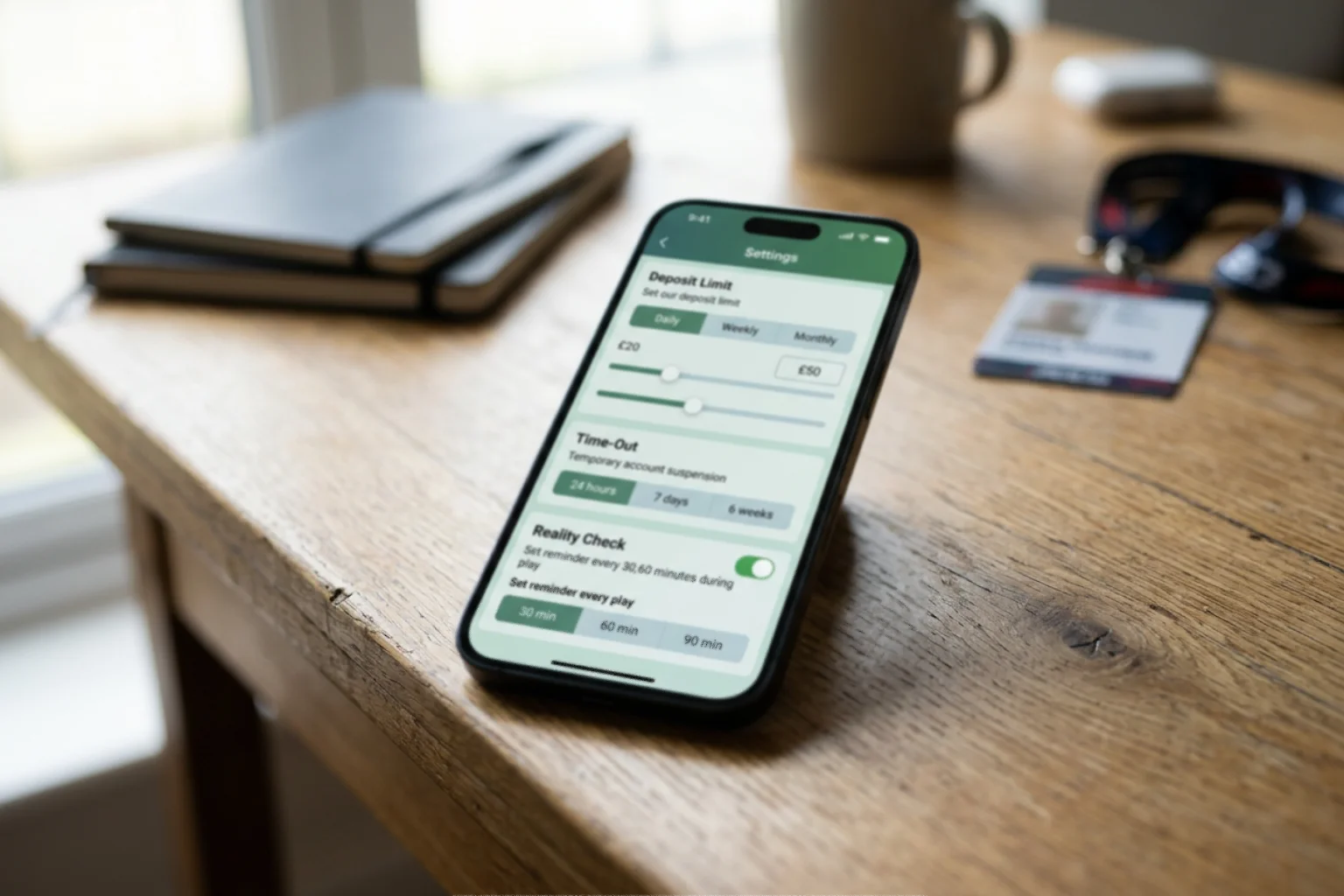
The deposit limit is the responsible gambling tool I’d recommend every UK F1 punter set up before they place their first stake. Every UKGC-licensed operator is required to offer deposit limits, and the limits can be set on daily, weekly or monthly cycles. Once set, the limit acts as a hard cap that the operator system enforces — no further deposits can be processed until the limit period resets.
The mechanics matter for the F1 context specifically. A typical F1 race weekend involves pre-race positions placed on Friday or Saturday, in-play positions during the race itself, and sometimes settlement-related decisions in the hours after. Setting a weekly deposit limit calibrated to the weekend’s planned exposure produces a structural barrier against tilt-driven re-deposits after a losing race. The limit doesn’t restrict winning — it restricts adding more money to the system in response to losses.
Loss limits are similar but operate on the outcome side rather than the input side. A weekly loss limit set at a defined level prevents the user from losing more than that amount across the limit period; once the threshold is reached, no further stakes can be placed until the period resets. Loss limits are less commonly used than deposit limits but they’re the more direct preventive tool for the specific F1 pattern of chasing losses with progressively larger stakes during or after a race.
The application speed of both types of limit is regulated. UKGC rules require that lowering a limit — making it more restrictive — takes effect immediately. Raising a limit — making it less restrictive — is subject to a cooling-off period, typically 24 hours, during which the user can change their mind. The asymmetry is deliberate. The regulator wants tightening discipline to be easy and loosening it to require deliberate reflection.
Time-out and reality checks for in-race discipline
Time-out is the shorter-duration sister tool to GAMSTOP, applied at the individual operator level. A time-out blocks the user from their account at a specific operator for a chosen short period — typically 24 hours, 48 hours, 7 days or 30 days — without affecting their access to other operators. The mechanics are designed for in-the-moment discipline rather than long-term self-exclusion.
The use case for time-out in F1 betting is specific. During a long race weekend where multiple in-play decisions are being made, a time-out can be a useful tool to enforce a defined break after a specific session. A user who’s noticed themselves making progressively less considered stakes across qualifying might apply a 24-hour time-out to enforce an overnight break before re-engaging with the race-day markets. The friction is intentional and constructive.
Reality checks are the lightest-touch version of the same family of tools. A reality check is a pop-up notification that appears in the operator’s app after a defined period of continuous use — typically 30 minutes or one hour — informing the user of how long they’ve been logged in and prompting them to consider whether to continue. The notifications are mandatory across UKGC-licensed operators and are intended as light cognitive friction rather than hard blocks.
What reality checks do well is interrupt the flow of extended in-play sessions. The 90-minute F1 race is exactly the kind of extended session where time perception can drift, and a reality check at the 60-minute mark is a useful cue to consider whether the staking pattern of the current session is matching the user’s pre-race intent. They’re not infrastructure that solves problems on their own, but they’re useful structural prompts within a broader discipline framework.
Andrew Rhodes, who runs the UK Gambling Commission, has been explicit about the regulator’s direction: “the substantial work done in 2024-25 gives the Commission a great opportunity to make further steps forward in our work to make gambling safer, fairer, and crime-free”. That framing maps directly onto the responsible-gambling tool environment that UK operators must provide. The tools above are the infrastructure that makes the “safer” part of that framing operationally real for individual punters.
Support resources for UK punters who need more than self-managed tools
The tools described above are preventive and structural. They work for users managing their own gambling within a defined framework. For users who recognise that their gambling has moved beyond the point where self-managed tools are sufficient, the UK has dedicated support resources that operate independently of the gambling industry.
BeGambleAware is the main awareness and signposting organisation, funded through industry contributions but operationally independent. The organisation runs the National Gambling Helpline, accessible 24 hours a day, and provides routes into treatment services for people experiencing gambling-related harm. The helpline is the recommended first point of contact for anyone who is uncertain whether their gambling pattern is problematic.
GamCare is the largest dedicated gambling support charity in the UK and operates treatment and counselling services across the country. Their support is free at the point of use and is available to anyone affected by gambling-related harm, including family members and others affected by someone else’s gambling. The combination of practical treatment provision and confidential support is what distinguishes GamCare from broader mental health services that may not have gambling-specific expertise.
The NHS has expanded its gambling-related harm provision substantially over the past several years, with the National Gambling Treatment Service offering a structured pathway through NHS-funded clinics. Access is through GP referral or direct self-referral, and the service is free to UK residents. For F1 punters whose gambling has progressed to the point where structured clinical support is appropriate, the NHS pathway is the most clinically robust option.
The broader category of vulnerability around young adult gambling — particularly the 18-24 cohort where the problem-gambling rate runs significantly higher than the adult average — has its own structural considerations that are worth understanding separately, and the picture is covered in more depth in the specific examination of UK student gambling patterns and the support routes that apply.
See also: explore how brands fund the sport in our F1 gambling sponsorship article.
Responsible gambling tool questions UK punters ask
Does GAMSTOP cover all UKGC-licensed operators?
Yes. Every operator holding a UKGC remote operating licence is required to integrate with GAMSTOP and to enforce self-exclusions against the central scheme database. The block applies simultaneously across every licensed operator from the moment the registration is processed, typically within 24 hours of completion. GAMSTOP does not cover offshore operators that don"t hold UKGC licensing, which is one of the practical reasons UK punters should use only UKGC-licensed operators for their F1 betting activity.
How quickly is a deposit limit applied?
A new deposit limit, or a tightening of an existing limit, takes effect immediately under UKGC rules. The operator system applies the limit from the moment the user confirms the change, and no deposits above the new limit can be processed from that point. A loosening of an existing limit — raising the maximum — is subject to a cooling-off period, typically 24 hours, during which the user can reconsider before the change takes effect. The asymmetry is deliberate regulatory design to make tighter discipline easy and looser limits require deliberate reflection.
