
 Available in US
Belgian Grand Prix Sprint Betting: Spa’s Weather Trap and Sprint Edge
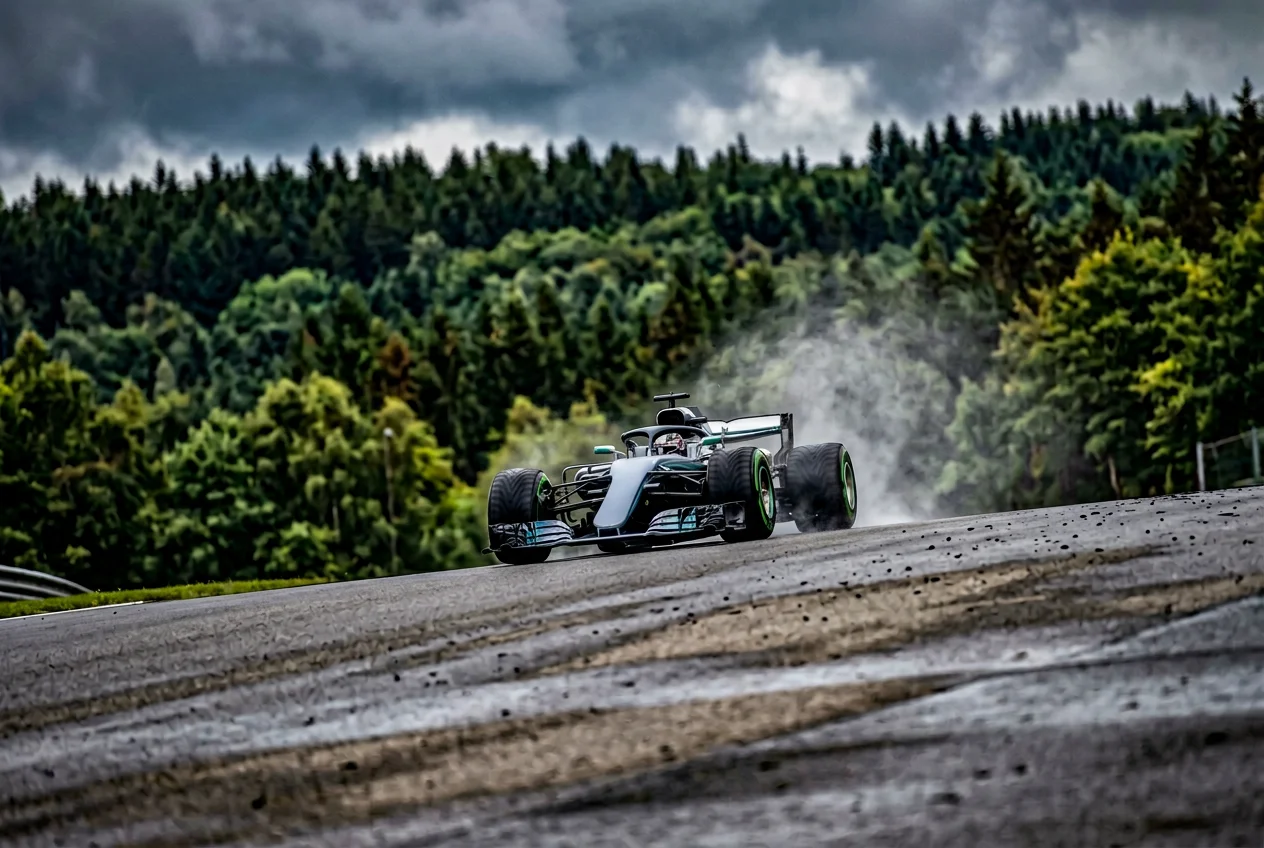
The race that out-drew the rest of the calendar
The first time I traded Spa as a sprint weekend, I broke even on a perfectly executed pre-race book and then made twice my Sunday position on a 12-minute window during the actual sprint, when the rain came in earlier than the forecast suggested and the market took 90 seconds to react. That experience taught me everything I needed to know about Spa: the venue exists at the intersection of weather chaos and pricing latency, and the sprint format amplifies both.
The 2025 Belgian Grand Prix drew more than 80 million viewers globally, making it the largest TV audience of the entire season. That wasn’t accidental. Spa-Francorchamps has the visual identity that Formula 1 sells on, the corner geometry that produces overtaking when conditions cooperate, and the Ardennes weather pattern that produces drama when they don’t. Sprint weekends in 2025 generated an additional 8% social mentions and a 4% lift in reach against non-sprint rounds, and Spa’s sprint round was the headline event in that surge.
For UK bettors, the combination is unusually valuable. High audience volume drags more public money into the market, which means dispersion between operators widens and the price-setting lag on weather changes becomes exploitable. Spa is the round where pre-race line shopping pays the highest dividend on any sprint weekend.
See also: f1 bet for Grand Prix-specific tips and previews.
What Spa-Francorchamps actually rewards
The circuit is 7.004 kilometres long — the longest on the calendar — and the elevation change from Eau Rouge to the top of the Kemmel Straight is large enough that the cars effectively race in two different weather systems on the same lap. That sentence is not a metaphor. The high section of the circuit can be receiving light rain while the low section, including Eau Rouge and Raidillon, is bone dry. The reverse is equally common.
The geometric character rewards three skills above all others. First, slipstream awareness on the Kemmel Straight, where the tow effect from the car ahead can be worth two to three tenths in lap time and reshapes everything from qualifying H2H pricing to race-winner odds. Second, commitment through Pouhon, the long left-hander that separates braves from cautious drivers in a way that very few corners on the modern calendar do. Third, tyre management across Pouhon-Stavelot-Blanchimont, where any slip will scrub the rear tyres beyond useful for the lap.
These skills don’t map cleanly onto the drivers who tend to be priced shortest at Spa. The race-winner market historically rewards the second-row qualifier on a wet weekend more often than the polesitter, because the slipstream and weather variance hands a small recovery window to anyone with the racecraft to take it. That dynamic is one of the structural reasons I rarely bet the Spa polesitter for the race win.
Weather volatility and the markets it bends
If you take only one thing away from Spa weekend strategy, take this: the weather forecast at 12:00 on Saturday is wrong by the time qualifying starts, and the forecast at 12:00 on Sunday is wrong by lights-out. The Ardennes weather system shifts on quarter-hour scales, and any pre-race market priced on a static dry-or-wet assumption is mispriced relative to the underlying volatility.
The two markets that move hardest on Spa weather are the race start condition — dry, intermediate or wet — and the safety car probability. The race-start condition market is offered on most UK books and is genuinely tradeable. The fair price for an intermediate start at Spa in late summer is meaningfully higher than the dry probability the books typically anchor their opening lines to. Whenever the model shows above 30% rain probability in the start window, intermediate-start pricing has been my most consistent edge across Belgian GP weekends.
Safety-car-yes pricing follows the same logic. Spa in mixed conditions has historically deployed the safety car at roughly twice the dry-condition rate. The base rate is already meaningful; the wet adjustment pushes it into territory where any pre-race yes-SC line longer than 6/4 represents genuine value when the rain forecast is non-trivial. The book updates on this market lag the weather data by typically one to two hours on a Saturday evening, and that lag is the window where the value sits.
The tyre-choice market is the third one worth watching. UK operators that offer “tyre on lap 1” or “tyre at the flag” markets sometimes price these as defensive ranges rather than directional calls. On weekends where the weather is genuinely uncertain, that defensiveness translates into both sides of the market being priced near fair — and a careful read of FP3 mixed-conditions running can identify which compound the front-runners are leaning towards.
The sprint format at Spa and what it changes
Sprint weekends at Spa compress the strategic variability that usually defines the venue. The 24-lap sprint race is roughly a third of the Grand Prix distance, and the strategic options shrink correspondingly. There’s no mandatory pit stop, no significant tyre degradation arc on most days, and limited room for genuine recovery drives.
What that compression produces is heightened variance on opening-lap incidents. Spa’s Turn 1 to Turn 5 sequence — La Source, the Eau Rouge climb, and the Kemmel run-out — has historically been one of the most accident-prone opening sectors in F1, and over a 24-lap sprint race the impact of a turn-one tangle is essentially un-recoverable. That’s why sprint podium pricing at Spa rewards mid-grid positions more generously than the headline race podium does. A fourth-row qualifier in a sprint at Spa has a noticeably higher conversion to podium-finish than they would in the equivalent Sunday race.
Sprint shootout pricing at Spa is the other market I watch closely. The Friday-afternoon timing of the sprint shootout means rain probability is highest in mid-to-late summer Belgian weather patterns, which produces an interesting timing arbitrage: the market often opens with dry pricing assumptions, the forecast updates an hour before the session, and only some operators move their lines in time. Whichever book takes longest to update is the one I take the value side from.
DNFs, red flags and the volatility that funds the bet slip
Spa has one of the highest red flag rates per race on the modern calendar, and that single fact deserves a paragraph of its own. The combination of long lap distance, fast corners, and mixed weather produces incidents that are harder to clear quickly than at any other permanent circuit. A stopped car at Stavelot needs marshal access from a long way off the racing line, and the recovery time often exceeds what a virtual safety car can cover safely.
Red flag yes-no markets are increasingly offered on UK operator books, particularly for Spa specifically. The base rate over the last decade puts red flag probability at roughly 35-40% in mixed conditions and closer to 15% in clean dry running. If the pre-race line on red-flag-yes drifts beyond 7/2 on a forecast wet weekend, it’s a position worth taking. The variance per bet is high, but so is the implied probability mispricing.
DNF markets compound the same dynamic. First-retirement betting at Spa rewards mid-grid drivers whose mechanical reliability is statistically weaker, because the geometry of the circuit punishes any oversteer error and the cars further back are usually the ones with less qualifying-trim setup discipline. The price gaps between operators on first-retirement markets at Spa are some of the widest I track all season — comparable to the dispersion I see on the Singapore weekend with its 100% safety-car deployment record, where similar structural volatility creates parallel pricing inefficiencies.
See also: championship points from sprints feed into the drivers’ championship odds.
The Belgian GP betting questions that come up most
How does Spa weather affect race winner odds?
Significantly, and in directions the books frequently mispriced through Saturday evening. Wet or mixed conditions historically favour second-row qualifiers over the polesitter at Spa because of slipstream and overtaking dynamics on the Kemmel Straight. If the rain probability in the Sunday start window rises above 30% and the books haven"t moved the second-row driver"s race-winner price, that gap is the value. Pre-race line shopping at Spa pays higher than at most rounds on the calendar.
Is a red-flag market available for the Belgian GP?
Most UK operators offer a red-flag-yes-or-no market for Spa specifically, given the circuit"s history of red flags in mixed conditions. Base rates sit around 35-40% in wet weekends and closer to 15% in clean dry running. The market is worth watching because the pricing dispersion between books on this market is wider than on safety-car-yes pricing, which means careful line shopping can capture meaningful edge on weekends with uncertain forecasts.
