
 Available in US
F1 Driver Head-to-Head Betting: Why H2H Is the Sharpest F1 Market
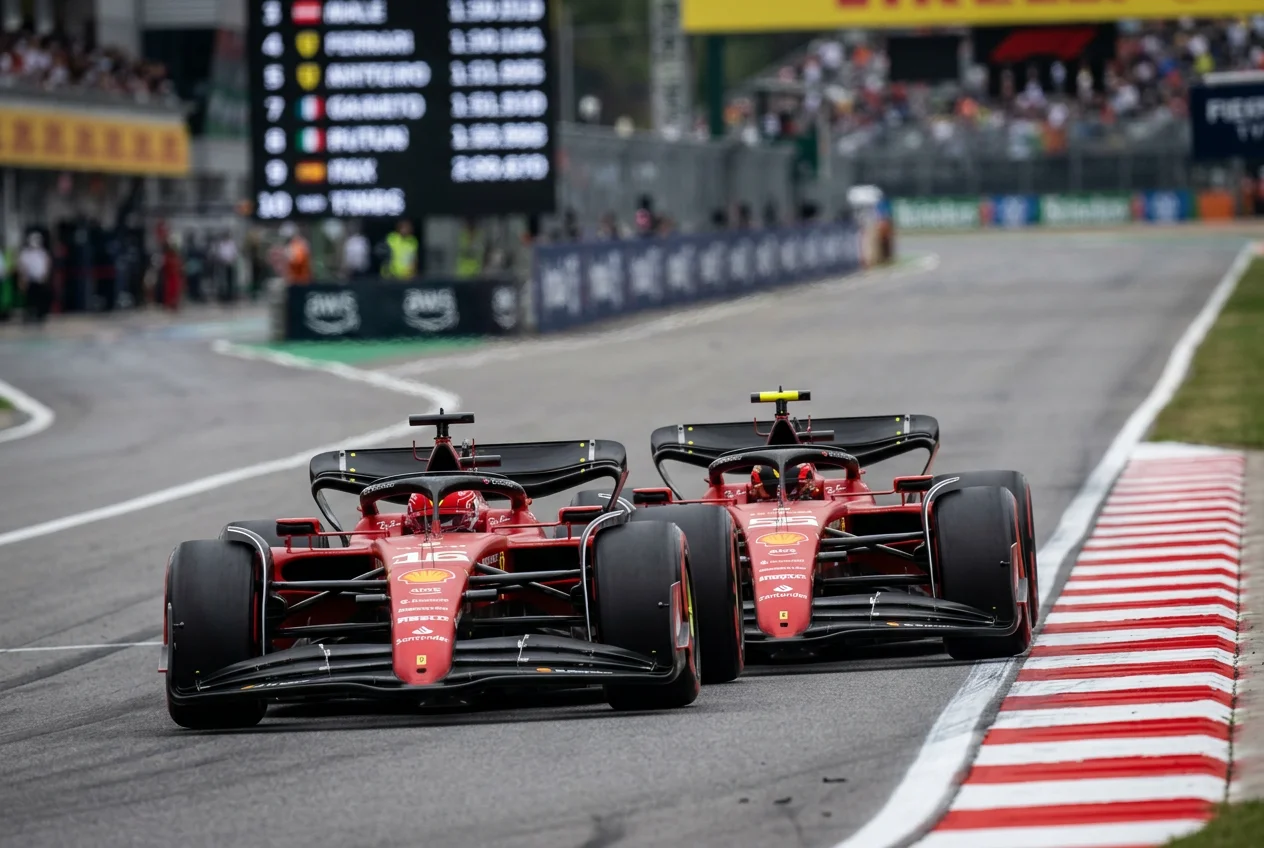
The market that strips out everything except the driver
If a friend asked me where to start with F1 betting and what to focus on for the first season, I’d answer in two words: teammate H2H. There is no market in Formula 1 that gives a UK bettor a cleaner picture of pure driver pace, and there’s no market where the books are more frequently a touch behind the data. Teammate head-to-head is the bedrock of every disciplined F1 staking plan I’ve run.
The reason is simple. When two drivers in identical cars race the same track on the same tyres in the same conditions, the variable that’s left is the driver. Everything that complicates race-winner pricing — aero packages, fuel strategy, team strategic preference, tyre allocation — washes out in a teammate comparison. What remains is a comparison of two flying laps or two race performances, and the timing data tells you who’s better with very little ambiguity.
That clarity is also why H2H is the sharpest market in the books. The five-to-fifteen percent pricing dispersion that defines F1 markets generally is narrowest on teammate H2H, because the books know they’re pricing a clean signal. But “narrowest” still leaves room for genuine edges, and over a full season the cumulative value adds up to more than I’ve ever extracted from any other F1 market.
See also: f1 bet for driver matchup analysis and picks.
How teammate H2H settles and where the catches live
The mechanics matter, because operators handle the edge cases differently. The basic settlement is straightforward: of two teammates, whichever finishes ahead at the chequered flag wins the H2H. If both finish, it’s the official classified position that counts. If one retires and one finishes, the finisher wins. If both retire, the rules diverge between operators.
That last case is the one most worth checking before you stake. Some UK books settle a double DNF as the driver who completed more laps wins the H2H. Others void the bet and refund the stake. Others settle on the last classified position at the time of retirement. The difference matters for any race at a high-DNF circuit, because double-retirement scenarios are non-trivial — particularly at Monaco, Spa, and Singapore.
Qualifying H2H has its own quirks. Most books settle on the official qualifying classification, which means a driver who’s faster in pure pace but knocked out in Q1 by a yellow flag still loses the H2H to a teammate who limped through to Q2. Some operators offer a separate “pure Q3 pace” H2H that only applies if both drivers reach Q3, which is a fairer expression of the underlying signal but requires both drivers to actually make it through. Reading the rules tab before staking is mandatory.
The other practical catch is the no-show rule. If a driver doesn’t take part in qualifying or the race because of mechanical failure or injury, most operators void the H2H. A few use a substitution rule where the replacement driver counts. Operators differ in their default policy, and the difference is sometimes the difference between a successful season and a frustrating one for anyone betting H2H heavily.
Qualifying H2H versus race H2H: where the edge is bigger
Across eight seasons of tracking these markets, I’ve found qualifying H2H consistently sharper than race H2H, and the reason is variance. Qualifying is a 90-second decision: one flying lap on softs, in low fuel, with the timing screen as the verdict. Race H2H runs across a 90-minute race with safety cars, strategy calls, tyre choices, and any number of factors that can flip the outcome regardless of underlying pace.
What that variance means for pricing is that race H2H lines have to be wider — the books need a defensive margin against the larger noise component. Qualifying H2H lines, by contrast, can be priced tighter because the signal is cleaner. But tighter pricing doesn’t mean no edge. It means the edges that exist are smaller per bet, and they require careful reading of FP3 long-run data to identify.
Professor David Forrest at the University of Liverpool has captured the structural picture of where the volume sits, noting that “in much of Europe, in-play now accounts for about 70% of sports betting GGY though its market share seems not yet to be quite so large in Great Britain”. The implication for H2H markets is interesting. Pre-race H2H is the cleaner pricing window for qualifying outcomes, because the books haven’t yet had to react to in-play flow. Once in-play volume hits the market, the lines tighten across the board.
The practical workflow is straightforward. I read FP3 long-run pace within teams, identify the qualifying H2H where one teammate is consistently quicker by three tenths or more on race-trim laps, and back them at modest stake sizes before the lines tighten on Saturday afternoon. The edge per bet is small, but the per-season volume is high — I’ll place 30 to 40 qualifying H2H positions over a calendar year, and the cumulative result is meaningful.
Cross-team H2H: where midfield value hides
Cross-team H2H is the market most casual bettors skip and most sharp bettors love. The matchups are paired manually by the books — typically two drivers from different teams who are believed to be competing for similar grid positions — and the lines reflect the operator’s view of which driver will finish ahead.
The Ladbrokes share of UK gambling pay-per-click market reached 36.8% in April 2026 — they’re the dominant operator on the cross-team H2H lines simply by reach. But dominance doesn’t always mean sharpness. The big books sometimes set cross-team H2H lines that don’t fully reflect form, particularly in the second half of a season when team performance trajectories have changed but the seasonal-form-based pricing model hasn’t caught up.
The mid-field cross-team H2H is where I take the biggest H2H positions of any sub-market. Drivers from teams in genuine fight for the constructors’ midfield places will be paired by the operators on weekend after weekend, and the lines often don’t update fast enough to reflect a team’s recent upgrade cycle. A team that’s brought a meaningful aero upgrade in the previous round will be priced based on the pre-upgrade form for at least one weekend, sometimes two, and the H2H lines against rival midfield drivers will lag accordingly. That lag is the value.
Season-long H2H and where it doesn’t deliver
Season-long H2H is offered on most UK books — the bet on which teammate will finish higher in the drivers’ championship at season end — and it’s the market I’d warn casual bettors away from. The edge is structurally narrower than per-race H2H, and the variance from single-event factors like injury, mid-season driver change, or championship-end strategic team decisions is high.
The pricing also sits very close to fair on these markets because the books take ante-post H2H seriously. The dispersion between operators that I’ve tracked sits well below the 5-15% range that defines per-race F1 markets. With dispersion narrow, the line-shopping edge that supports per-race H2H betting is missing on the season-long lines.
The exception is when a team announces a mid-season driver change. Replacement-driver season-long H2H can produce meaningful value if the replacement is faster than the books initially priced them. Those edges appear maybe once a season and last for one or two weekends. Outside of that scenario, season-long H2H is a low-EV market for most punters.
The same intra-team pricing logic that drives H2H markets also drives the broader picture in how the constructors’ title odds shift as the two-car points haul accumulates, because the underlying signal is identical — driver-versus-driver pace inside a single car platform.
See also: get the best price with our F1 line shopping UK guide.
The H2H questions punters return to
How is teammate H2H settled if both retire?
The default settlement varies by operator. Some UK books award the H2H to whichever teammate completed more laps before retiring. Others void the bet and refund the stake. A smaller number settle on the classified position at the moment of retirement. Read the operator"s rules tab before staking H2H on a race with high DNF probability — at Monaco, Spa or Singapore the double-DNF scenario isn"t rare enough to ignore.
Are season-long H2H better value than race H2H?
Generally no. Season-long H2H is priced closely to fair across UK operators because the books take ante-post markets seriously, and the line-shopping dispersion that drives per-race H2H value is much narrower on season-long markets. The exception is mid-season driver replacements, where the books can lag the new driver"s actual pace by a weekend or two and create temporary value. Outside that scenario, per-race H2H is the cleaner edge.
