
 Available in US
F1 Constructors’ Championship Betting: Two-Car Math and Mid-Season Drift
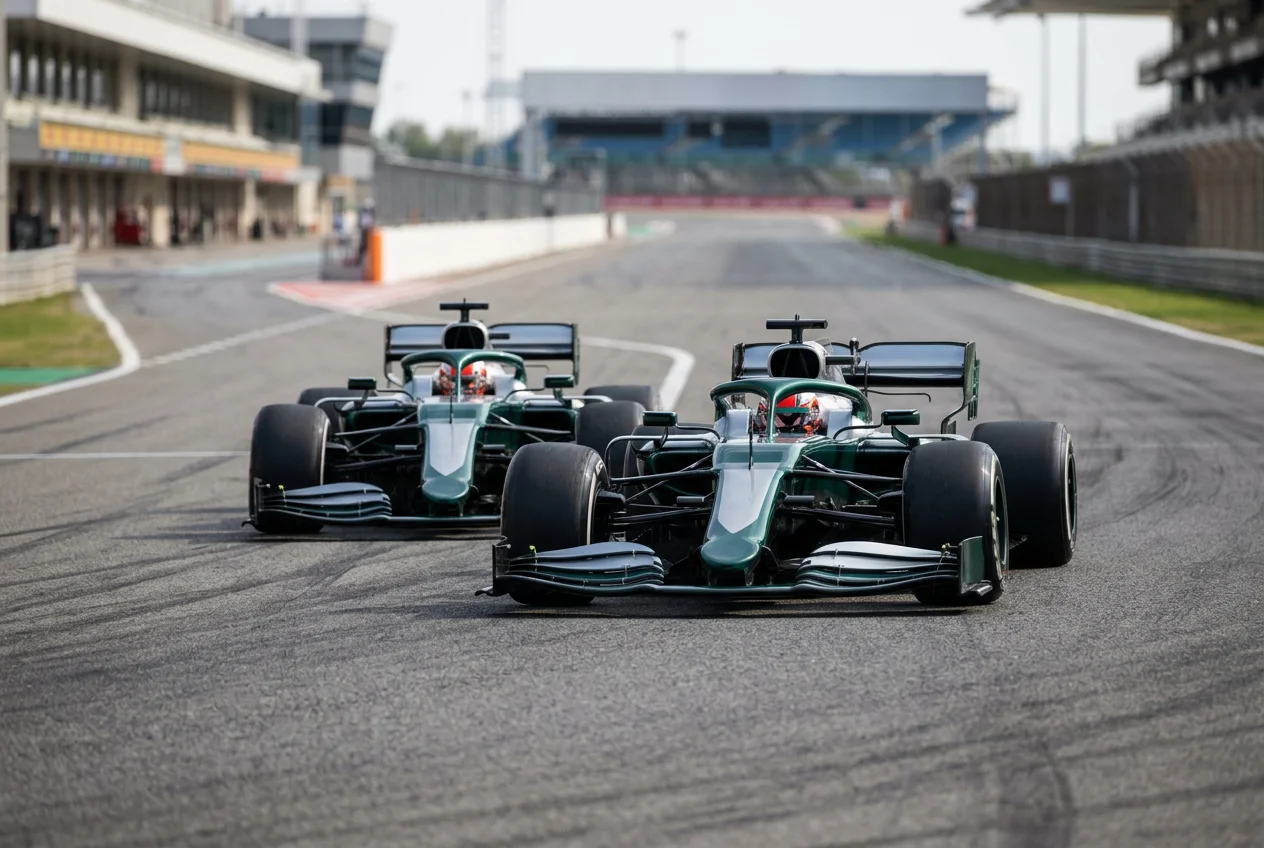
The longest, slowest, cleanest bet on the calendar
The single best betting decision I ever made was an early-season constructors’ position taken in March one year, on a team that had outperformed expectations across the first three rounds. I held that ticket for the entire season and watched it pay 8/1 in November. It worked because the constructors’ title is the slowest-moving market in F1, and slow-moving markets reward patience.
The maths is simple, but most punters skip past it. Drivers’ championship outcomes depend on one car. Constructors’ championship outcomes depend on two cars. That single doubling of the data input means the constructors’ title is statistically more predictable from mid-season onwards than the drivers’ title, because variance washes out faster when you’re averaging two sample sets instead of one.
For UK bettors, the practical effect is that constructors’ title positions get easier to read as the season progresses, while drivers’ title positions stay genuinely uncertain. The price-discovery period for the constructors’ market is shorter, which means the value windows close faster. Catching them requires a different rhythm to single-race betting.
See also: f1 bet for championship and outright markets.
The two-car math that decides everything
A constructors’ title is the sum of two drivers’ season points. That sentence is obvious. The implication is less obvious. Teams that have one championship-fighting driver and one midfield driver are structurally disadvantaged against teams that have two consistently competitive drivers, even when the first team’s lead driver is the faster individual.
The historical record is full of examples where the “weaker” team won the constructors’ title because their second car outscored the rival team’s second car by a margin that exceeded the first-driver gap. The 2024 McLaren season was the most recent textbook case — two consistent points-finishers, neither of them the absolute fastest driver in the championship, but the cumulative haul outpaced rivals whose second seat scored less reliably.
The betting expression of this dynamic is that constructors’ title value sits in teams with high second-driver scoring consistency, not necessarily teams with the fastest lead driver. Pre-season constructors’ pricing often follows the drivers’ market — the team with the championship-favourite lead driver gets the shortest constructors’ price. That sometimes mismatches the underlying probability, particularly when the lead driver’s teammate is unproven or has historically struggled with consistency.
The mechanical workflow I use is straightforward. By the third or fourth race of a season, I compare the actual second-driver points haul against the pre-season expectation. Teams whose second seat is outperforming the pre-season model by 30% or more are usually undervalued in the constructors’ market. That’s the position-taking window.
Mid-season drift and the June-to-August window
The constructors’ market has a specific seasonal pattern that’s worth understanding because it creates predictable value windows. The period from the start of June to the end of August — roughly the Spanish Grand Prix through the Italian Grand Prix — is when the constructors’ lines drift the most, and the drift isn’t always priced in real time.
The reason is calendar-structural. Teams introduce major upgrade packages around the European triple-headers in June and July, the summer break sits in early August, and by Monza the upgrade cycle has settled into its second-half-of-season form. Each step in that sequence is a potential pricing inflection point, and the books don’t always update their constructors’ lines fast enough to keep pace with the upgrade-driven order changes.
The specific window I watch is the four-race stretch from Canada through to the Belgian Grand Prix. Teams that come into June competitive but introduce a misjudged upgrade can drop a place in the constructors’ standings inside three races, and the constructors’ price for the descending team can lag the actual probability by a meaningful margin. The fade is profitable when the price hasn’t moved. The back is profitable on the team that’s overtaking them, particularly when their second driver is also scoring consistently.
The summer break compounds the pattern. The four-week shutdown freezes development, which means any team that goes into the break with momentum tends to come out of it with the same momentum. Constructors’ title positions taken at the start of August have historically been my most reliable single-position bets of the calendar, because the structural lock-in of the summer shutdown reduces variance for the rest of the year.
The 2026 power-unit reshuffle and what it means
The 2026 season opens with four active power unit manufacturers — Ferrari, Mercedes, the Red Bull Powertrains and Ford partnership, and Audi — plus Honda returning to the grid with Aston Martin. That’s the most diverse power unit landscape in over a decade, and it has structural implications for constructors’ title pricing that the books are still working out.
The power-unit regulations themselves are a 50/50 split between internal combustion and electrical energy, with the MGU-K increased from 120 kW to 350 kW and the MGU-H removed entirely. That’s a fundamental change to how cars generate and deploy energy across a lap, and it scrambles the historical predictive value of pre-2026 performance data.
For constructors’ title pricing, the practical implication is that ante-post 2026 constructors’ lines are genuinely uncertain. The teams that were strongest in 2025 may not be the teams that adapt fastest to the new power units. The teams with the most established power-unit engineering capability — Mercedes, Ferrari — have a historical advantage, but the gap to Audi and the Red Bull-Ford partnership is hard to predict without testing data.
The ante-post constructors’ market is wider in 2026 than in any recent season. UK operators are pricing the title race with a tail of credible contenders rather than a clean two-team battle, which means the line dispersion between books is structurally wider. That’s the line-shopping opportunity. The five-to-fifteen percent typical F1 dispersion is sitting at the upper end for 2026 constructors’ markets, and careful comparison across operators is worth more this year than in any season I’ve tracked.
Historical value patterns worth knowing
Two historical patterns matter for any UK punter building a constructors’ title view. The first is the regulation-reset pattern. When new technical regulations come in — 2014 with the V6 hybrid era, 2022 with the ground-effect era, and now 2026 — the constructors’ title for the first year of the new regs has typically been won by the team that prepared most aggressively, not the team that was strongest in the previous year. Mercedes in 2014 is the cleanest example. The team had been a midfield outfit through 2012-13 and dominated the V6 hybrid era because they’d committed earlier and more deeply to the engineering of the new power unit.
The second pattern is the second-driver consistency premium. Across the last ten constructors’ titles, the winning team has almost always had a second driver who scored above the championship median for second drivers. The exception is the McLaren 2024 season I mentioned earlier, which was actually the inverse — two consistent drivers, neither of them a championship favourite, outperforming as a pair. Both patterns point in the same direction: backing teams with high second-seat consistency at pre-season prices tends to outperform backing teams with high lead-driver dominance.
The drivers’ title and constructors’ title diverge meaningfully in some seasons, which is what makes the timing of drivers’ title positions a separate question with its own pricing rhythm, distinct from the constructors’ market that this article focuses on.
See also: sprint weekends offer extra points — read our F1 sprint race betting tips.
Common constructors’ title questions
When do constructors" title odds stabilise in a season?
Typically around the Italian Grand Prix in early September, after the summer break has frozen development and any post-break upgrade trajectories are visible. Pre-break pricing carries genuine uncertainty because mid-season upgrade cycles can reshuffle order across two or three races. Post-Monza, the constructors" market becomes one of the lowest-variance positions on the F1 calendar, which is also when the value windows have closed.
Should I split bets between drivers" and constructors" markets?
They behave differently enough that splitting positions across both markets is generally rational. Drivers" title outcomes have higher per-race variance because they depend on one car; constructors" outcomes are more predictable from mid-season because they depend on two. A balanced ante-post position takes both lines, sized differently — typically larger on constructors" because the variance is lower, smaller on drivers" because the implied volatility is higher and the line moves more in-season.
