
 Available in US
F1 2026 Reliability Betting: DNFs, First Retirement and the New Hybrid Risk
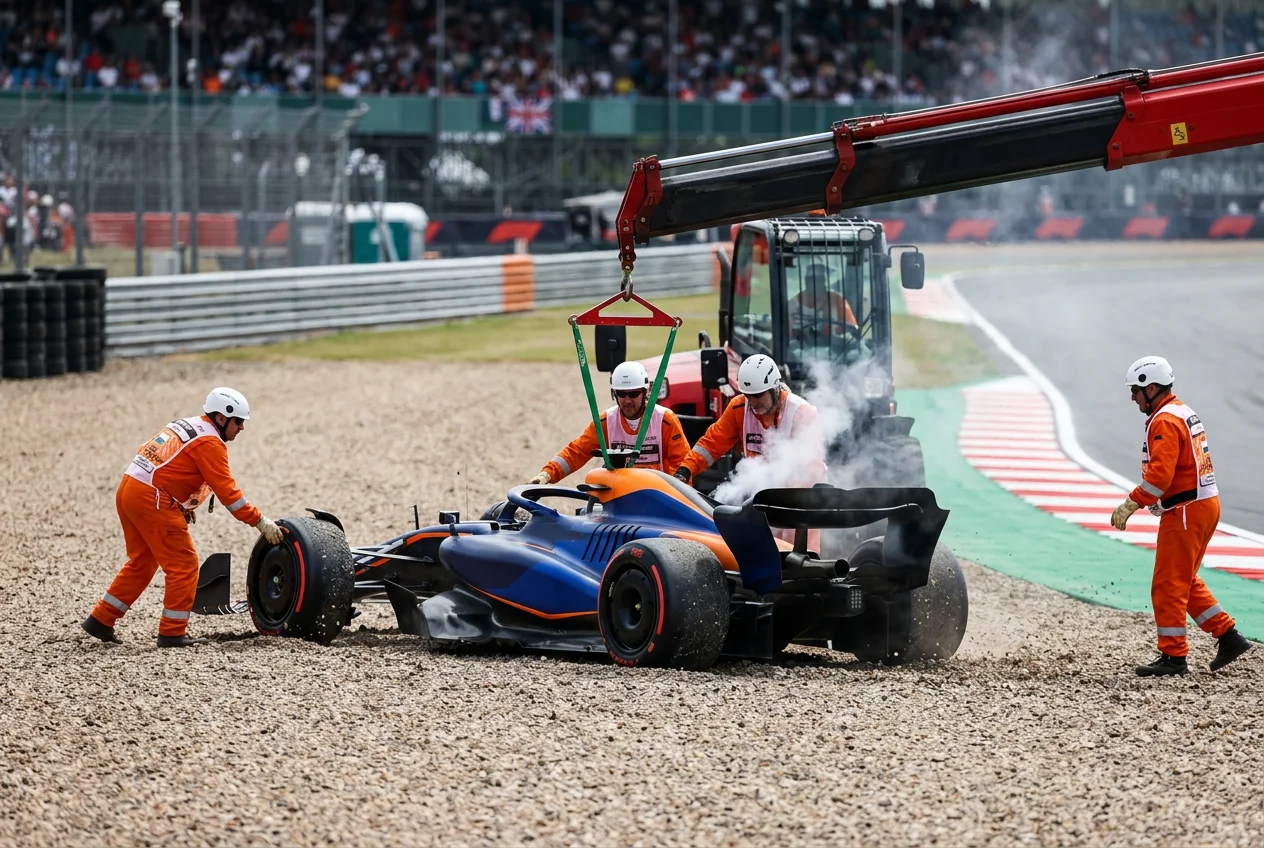
- The market that thrives when nothing else can be predicted
- What history says about reset seasons and reliability
- How first retirement markets settle and where the rules vary
- Power unit stress in the 2026 architecture
- Chassis and safety upgrades that shape the picture
- Where reliability betting fits in a broader staking plan
- 2026 reliability betting questions
The market that thrives when nothing else can be predicted
The 2026 season has been billed as a great unknown across the F1 paddock, and the betting markets are mostly reacting with appropriate caution. But there’s one corner of the calendar where the regulatory reset isn’t a problem — it’s the reason the market exists. Reliability and first-retirement betting thrives on uncertainty, and 2026 is producing more genuine uncertainty than any season since the 2014 hybrid introduction.
Fred Vasseur, who runs Ferrari, captured the operational picture clearly: “the biggest challenge is probably that we are starting from scratch on everything — new tyres, new fuel, new engine, new chassis, new sporting regulations — new everything. It’s quite challenging”. From a reliability betting perspective, every one of those new variables is an additional risk vector. New chassis introduce new flex characteristics. New power units introduce new failure modes. New tyres introduce new wear patterns. Each one alone would produce a small uptick in DNF rates. Together they suggest the opening five races of 2026 will produce the highest combined DNF rate in over a decade.
For UK punters, that combination is the bet. First-retirement and DNF markets are not the headline lines that draw casual money, which means they remain priced based on the historical baseline rather than the forward-looking volatility. The opportunity is to position before the books update their models in light of the actual 2026 reliability data.
See also: f1 bet for technical and regulation-based betting angles.
What history says about reset seasons and reliability
Across the four major regulation resets of the modern era — 2009, 2014, 2017, and 2022 — the first year of each new regulatory cycle produced significantly higher DNF rates than the seasons that bracketed it. The pattern is mechanical: new components have not been stress-tested at race distance, and edge cases that wouldn’t appear in 1500 simulated kilometres do appear when 20 cars run them in race conditions across a full season.
The 2014 V6 hybrid introduction is the cleanest analogue for 2026, because both involve fundamental power unit reset. The 2014 opening race in Melbourne saw four DNFs from mechanical failure alone, not counting accident-related retirements. By the end of the first third of the 2014 season, the DNF rate had settled into a high but stabilising pattern, with reliability improving meaningfully by the European leg.
The 2026 reset is more comprehensive than 2014 was. The 2014 changes affected the power unit and energy recovery system, but the chassis architecture remained substantially similar. The 2026 changes affect the chassis, the aerodynamics, the power unit, and the energy management system simultaneously. The structural risk surface for mechanical failure is broader, and the implication for DNF rates is straightforward — they should run noticeably higher than 2025 across the opening third of the season.
Book pricing on first-retirement markets at the season opener will tend to use the historical 2025 baseline for most teams. That baseline is structurally too low for 2026 reliability conditions. Backing first-retirement lines that imply a probability lower than the actual reset-year base rate is the position-taking edge for the opening rounds.
How first retirement markets settle and where the rules vary
The first retirement market is one of the most settlement-rule-dependent in F1 betting, and the variance between UK operators on the edge cases is genuinely meaningful. The basic settlement is straightforward: the first driver to officially retire from the race wins the market. The complications are in the definition of “retire” and in the handling of lap-1 incidents.
Lap-1 incidents are the largest source of operator divergence. Some books treat any driver classified out before the end of lap 1 as a first-retirement contender. Others exclude lap-1 retirements from the market entirely, settling instead on the first driver to retire after lap 1 is complete. The 2026 rule structure rewards careful reading of the operator’s specific terms, because opening-lap chaos is one of the higher-probability outcomes of a reset-year season.
The 50/50 hybrid split that defines the 2026 power unit is the structural variable most likely to produce mechanical retirements in the opening races. The MGU-K running at 350 kW is delivering nearly three times the peak power of the previous specification, and the thermal management challenge that creates is genuinely new. Battery cooling, MGU-K bearing reliability, and electrical-mechanical integration are all areas where edge-case failures are likely to appear before the teams have raced enough kilometres to identify and fix them.
The race-control retirement is another rule-edge worth noting. If race control orders a car to retire — usually for safety reasons after damage that doesn’t immediately stop the car — most UK operators count that as a retirement for market purposes. But the precise timing of when the “retirement” is recorded varies, and on a tight first-retirement bet the difference can be the difference between settling for or against.
Power unit stress in the 2026 architecture
The 2026 power unit places more thermal and mechanical stress on its components than any previous F1 architecture, and that stress profile shapes the reliability market in ways that the books are still calibrating to. The 350 kW MGU-K running with 8.5 megajoules of total energy recovery per lap is a step change in energy management complexity.
The MGU-K Override mode adds a further reliability variable. The override delivers full 350 kW power up to 337 kilometres per hour when a car is within one second of the car ahead, which means the override gets activated multiple times per lap on most circuits. Each activation cycle adds thermal load to the MGU-K and the inverter electronics that drive it. Teams that haven’t fully thermally validated their override usage will see the failures appear during race conditions rather than testing.
The energy recovery doubling — from the previous 4 megajoules per lap to 8.5 megajoules — also stresses the battery cooling system in new ways. Battery thermal management was a known reliability challenge across the V6 hybrid era and is likely to be a larger one in 2026 because the energy storage and release rates have both increased substantially. First-half-of-season DNF rates attributed to electrical and battery systems are likely to be elevated.
The four-way manufacturer split in 2026 also matters here. With Ferrari, Mercedes, Red Bull Powertrains/Ford, and Audi all running different PU architectures, the reliability picture across teams won’t be uniform. Audi’s first-year PU is the structural outlier — likely the highest DNF rate of the four manufacturers in early 2026 simply because the operational pedigree is shortest. First-retirement positions on Audi cars in the opening five races have been one of my pre-season positions, sized small to reflect the longshot character of single-event DNF bets.
Chassis and safety upgrades that shape the picture
The 2026 chassis regulations include significant safety enhancements that are worth understanding for reliability betting because they change the probability of accidents converting to DNFs. The roll hoop strength has been increased by 23% over the previous specification, and the front impact structure is now two-stage rather than single-stage. The survival cell passes more demanding intrusion tests than any previous F1 architecture.
What that means for betting is that accidents will more reliably produce drivable cars than in previous regulation eras. The driver in a single-car incident is more likely to be able to continue under repair than to be classified as a DNF. The DNF rate from accidents — as distinct from mechanical failure — is likely to be lower in 2026 than in 2025, not higher.
The combined picture is therefore an interesting mix. Mechanical DNFs are likely to be elevated through the opening third of the season because of the new power unit and chassis architecture. Accident DNFs are likely to be lower because of the improved structural safety. The net DNF rate is probably higher than 2025 — but the distribution across causes is different, and that matters for any market that distinguishes between mechanical and accident retirement.
The first-retirement market doesn’t typically distinguish between causes, so the net higher rate is the relevant signal. But operator-specific “mechanical retirement first” markets, where they exist, are likely to offer more value than the headline first-retirement line in the early 2026 rounds.
Where reliability betting fits in a broader staking plan
First-retirement and DNF betting is structurally high-variance, and the staking approach has to reflect that. The per-event probability of any specific driver retiring is in the range of 5-15% in a typical race, which translates to long pre-race odds and significant single-event volatility. Position sizes should be small — 0.1 to 0.3 units — and the staking plan should expect a strike rate below 30% even on positions where the implied probability suggests genuine value.
The other discipline is to avoid stringing reliability bets together. Bet builders that combine first-retirement with race winner or podium markets produce correlated leg structures that book operators sometimes price aggressively. The handling of correlation across multi-leg builds is itself a specific topic, covered in detail in the broader guide to combining F1 markets into single tickets, but the general principle is that reliability markets should generally stand alone rather than being combined into longer-priced builds.
See also: reliability depends on engines — explore our power unit manufacturers betting guide.
2026 reliability betting questions
Is a lap-1 incident a first retirement for settlement?
It depends on the operator. Some UK books count any driver classified out before the end of lap 1 as a first-retirement contender. Others exclude lap-1 retirements entirely, settling instead on the first driver to retire after lap 1 is complete. The difference can flip a winning bet to a losing one on a first-corner incident. Read the operator"s first-retirement market rules before staking, particularly on circuits with high opening-lap incident rates like Monaco, Spa or Singapore.
Will reliability stabilise by mid-2026?
The historical pattern from previous regulation resets — 2014, 2017, 2022 — suggests reliability typically stabilises by the European leg of the season, which in 2026 means by the time the championship arrives at Imola or Spain. Opening-round DNF rates run elevated; by race seven or eight, the teams have identified and fixed most of the dominant failure modes. The betting implication is that first-retirement positions are most likely to find value in the opening five rounds, and that the implied probability of mechanical DNFs should be discounted from race six onwards as the teams" reliability matures.
