
 Available in US
F1 Gambling Sponsorship in UK Motorsport: Rules, Limits and the Premier League Precedent
The direction of travel that everyone in the paddock can see
Football set the regulatory pace on gambling sponsorship in 2025, and the rest of UK sport has been watching the precedent settle ever since. Premier League clubs voluntarily agreed to remove gambling sponsorship from the front of playing shirts from the end of the 2025/26 season, in a deal hammered out between the league and government over the preceding two years. Sleeve and stadium sponsorship remain permitted. Front-of-shirt branding does not.
F1 is not under the same restriction yet, but anyone paying attention to UK gambling policy can see the direction of travel. The Premier League agreement is the most visible precedent of a UK-resident sport voluntarily ringfencing its highest-visibility advertising real estate from gambling brands, and the same logic that produced that agreement is being actively applied to other sports. Whether F1 broadcasts and team livery follow the same trajectory in the next two to three years is a genuinely open question.
For UK punters, the question matters less as a betting issue and more as a context-setting question. The regulatory environment for the operators they use is shifting, and the long-term direction is towards tighter advertising rules and more transparent sponsorship-source disclosure. That trajectory shapes how the F1 betting market will look in 2027 and 2028, even if the immediate 2026 picture is largely unchanged.
See also: f1 bet for industry context and betting guides.
The current F1 sponsorship landscape in UK broadcast
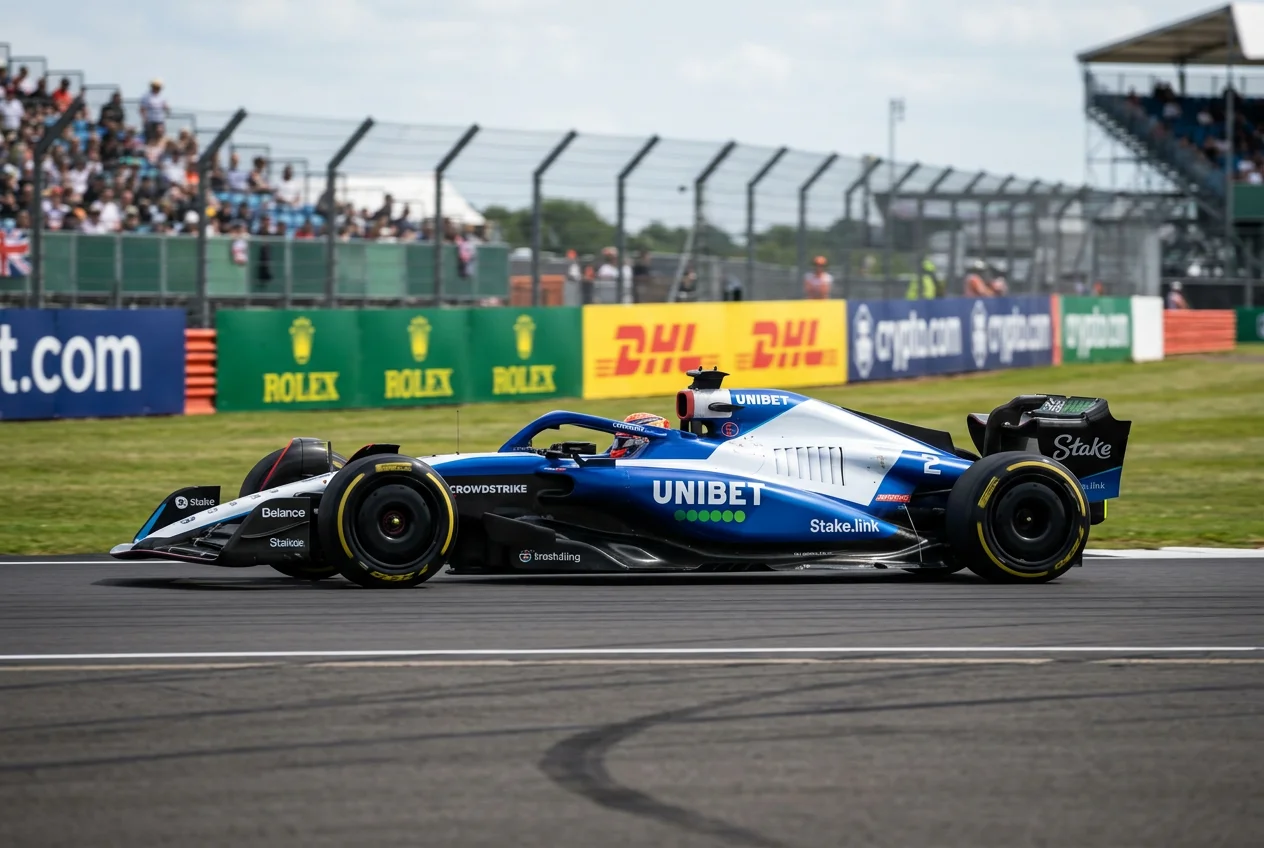
F1 teams in 2026 carry a mix of gambling-related sponsorship that varies significantly between cars. Some teams have prominent gambling brand placement on sidepods or rear wings. Others have no gambling sponsorship at all. The variation reflects each team’s commercial strategy and the regulatory environment in their primary commercial markets — not all teams optimise for UK broadcast, even though the UK is a meaningful share of their viewership.
What’s visible on UK broadcasts is governed by a separate set of rules around advertising standards, sponsorship disclosure, and the watershed framework. Sky Sports F1, which holds the UK broadcast rights, operates under Ofcom and Advertising Standards Authority rules that constrain gambling advertising in specific ways. Pre-watershed gambling content has tighter restrictions than post-watershed equivalents, and live race broadcasts during family-viewing hours are subject to specific advertising limits.
The whistle-to-whistle ban — the voluntary industry agreement that removes gambling advertising from broadcasts five minutes before kick-off until five minutes after the final whistle — applies to football broadcasts but has no direct F1 equivalent. F1 race broadcasts are typically scheduled around watershed times in ways that already comply with broader advertising rules without requiring a sport-specific whistle-to-whistle equivalent.
The operators sponsoring F1 events and teams from a UK regulatory perspective are subject to the standard UKGC licensing framework, including responsible gambling messaging requirements, age verification, and the general advertising codes that apply to gambling brands across all media. The presence of an operator’s logo on an F1 car visible in UK broadcasts is not, by itself, a regulatory issue under the current framework.
The Premier League precedent in detail
The Premier League gambling sponsorship agreement is worth understanding in detail because it’s the most likely template for any F1-related future restriction. The agreement was negotiated through 2023 and finalised across 2024 and 2025, with the front-of-shirt ban taking effect from the end of the 2025/26 season. The agreement was voluntary in the sense that the league’s clubs collectively agreed to the framework, rather than being imposed by primary legislation.
What the agreement covers and what it leaves alone are both important. The covered piece is the front of the playing shirt — the most visible single piece of advertising real estate on a Premier League broadcast. Sleeve sponsorship by gambling brands remains permitted. Stadium naming rights and perimeter advertising remain permitted. Match programmes and official club merchandise can still carry gambling sponsorship. The agreement was specifically scoped to the most visible, family-audience-facing piece of real estate, not to gambling sponsorship in football as a whole.
The narrowness of the agreement matters because it points to the likely shape of any F1 equivalent. If F1 were to negotiate a similar voluntary restriction, the most likely target would be the highest-visibility position on the cars — probably the engine cover or rear wing endplate, which are the most prominently visible in standard broadcast camera angles. Lower-visibility positions on sidepods, suspension wings, and other secondary surfaces would likely be untouched.
The implementation timeline is also instructive. The Premier League agreement took about three years from initial discussions to full implementation. An F1 equivalent would take at least as long given the complexity of multiple teams and the international nature of the championship, which means even if discussions began in 2026, the practical implementation wouldn’t be visible to UK broadcast audiences until 2028 or 2029 at the earliest.
The TGP Europe case and what it signalled
The TGP Europe exit from the UK market in early 2025 was the most significant single regulatory event in UK gambling sponsorship in recent years, and its implications for F1 sponsorship are worth understanding directly. TGP Europe was an operator that held sponsorship deals with multiple Premier League clubs — Bournemouth, Fulham, Newcastle United, Wolverhampton Wanderers and Burnley among them — and had become a prominent visible brand in UK football through those sponsorships.
The UKGC investigation into TGP Europe centred on compliance failures including issues with anti-money laundering controls and social responsibility obligations. The investigation resulted in a £3.3 million fine and the operator’s decision to exit the UK market entirely. The exit was structurally significant because it removed a substantial sponsor from multiple high-profile UK sport contexts overnight, and the clubs involved had to scramble to find replacement sponsorship in a sector that was already under tightening regulatory pressure.
The signal for F1 was indirect but real. UK gambling operators sponsoring sport visible on UK broadcasts are operating in an environment where compliance failures can lead to abrupt market exit, which means F1 teams accepting sponsorship from UK-facing operators carry secondary commercial risk that’s worth pricing into the relationship. The teams that have continued to take gambling sponsorship since the TGP Europe case have generally favoured operators with stable UK regulatory standing, which is sensible commercial discipline.
For UK F1 punters, the practical takeaway is that the operators sponsoring teams in 2026 are mostly the operators with strong existing UKGC compliance records. That correlation between visible sponsorship and operational stability is useful information when choosing which UK books to use — the sponsoring operators are not necessarily the best-priced, but they’re typically the most operationally reliable.
The broadcast advertising rules and what they cover
UK gambling broadcast advertising rules are layered. The Committee of Advertising Practice code, applied through the Advertising Standards Authority, sets the substantive content rules for gambling advertising regardless of broadcast time. Ofcom rules govern scheduling and watershed compliance for broadcast advertising specifically. The Gambling Industry Code for Socially Responsible Advertising adds an industry-self-regulatory layer including the whistle-to-whistle commitment.
What all of these rules collectively constrain is the type of gambling advertising that can appear during F1 broadcasts in the UK. Advertising must not target under-18s, must not imply gambling is a route to financial security, must not portray gambling in a context of social or sexual success, and must include responsible gambling messaging where required. The substantive rules apply to in-broadcast advertising — typically commercial breaks during the F1 broadcast — rather than to sponsorship visible on the cars themselves.
See also: discover every available wager type in our F1 betting markets explained guide.
Sponsorship visible on cars is treated differently from in-broadcast advertising. The visible logo on a sidepod is governed by the substantive content rules indirectly, in the sense that an operator’s UKGC licence requires compliance with advertising codes across all visible appearance contexts. But the operational rules — what time of day the broadcast runs, how prominent the logo is, how often the broadcast camera shows that specific car — are not separately regulated in the way that an in-broadcast TV advert would be.
For 2026, the regulatory direction is towards more transparency in operator sponsorship and clearer responsible-gambling messaging across all visible advertising channels, but the structural rules governing what can be sponsored and where remain broadly the same. The Premier League precedent suggests further voluntary restrictions are possible, but the timeline for any F1 equivalent is genuinely uncertain.
The broader regulatory framework also feeds into the responsible-gambling tool environment that UK operators must provide to UK punters, which is the practical infrastructure that any UK F1 bettor should be using regardless of the sponsorship landscape question.
UK gambling sponsorship questions in F1
Are F1 teams allowed to wear gambling logos on UK broadcasts?
Yes, under the current regulatory framework. Gambling sponsorship visible on F1 cars during UK broadcasts is governed by the standard UKGC operator licensing framework and the general advertising codes applied through the Advertising Standards Authority. There is no F1-specific equivalent to the Premier League voluntary front-of-shirt ban, and team liveries can carry gambling brand placement in any visible position subject to those general rules. Future changes are possible but no implementation timeline has been confirmed.
Could F1 follow Premier League"s shirt ban?
It"s a credible possibility but not an announced policy. The Premier League agreement took about three years from initial discussions to full implementation, and any F1 equivalent would face additional complexity given the international structure of the championship and the involvement of multiple teams with different commercial strategies. If discussions began in 2026, the practical implementation wouldn"t be visible to UK broadcast audiences until 2028 or 2029 at the earliest. The direction of travel is consistent with such a change, but the timeline remains genuinely uncertain.
