
 Available in US
F1 Pre-Season Testing Betting: What Bahrain Testing Tells You (and What It Doesn’t)
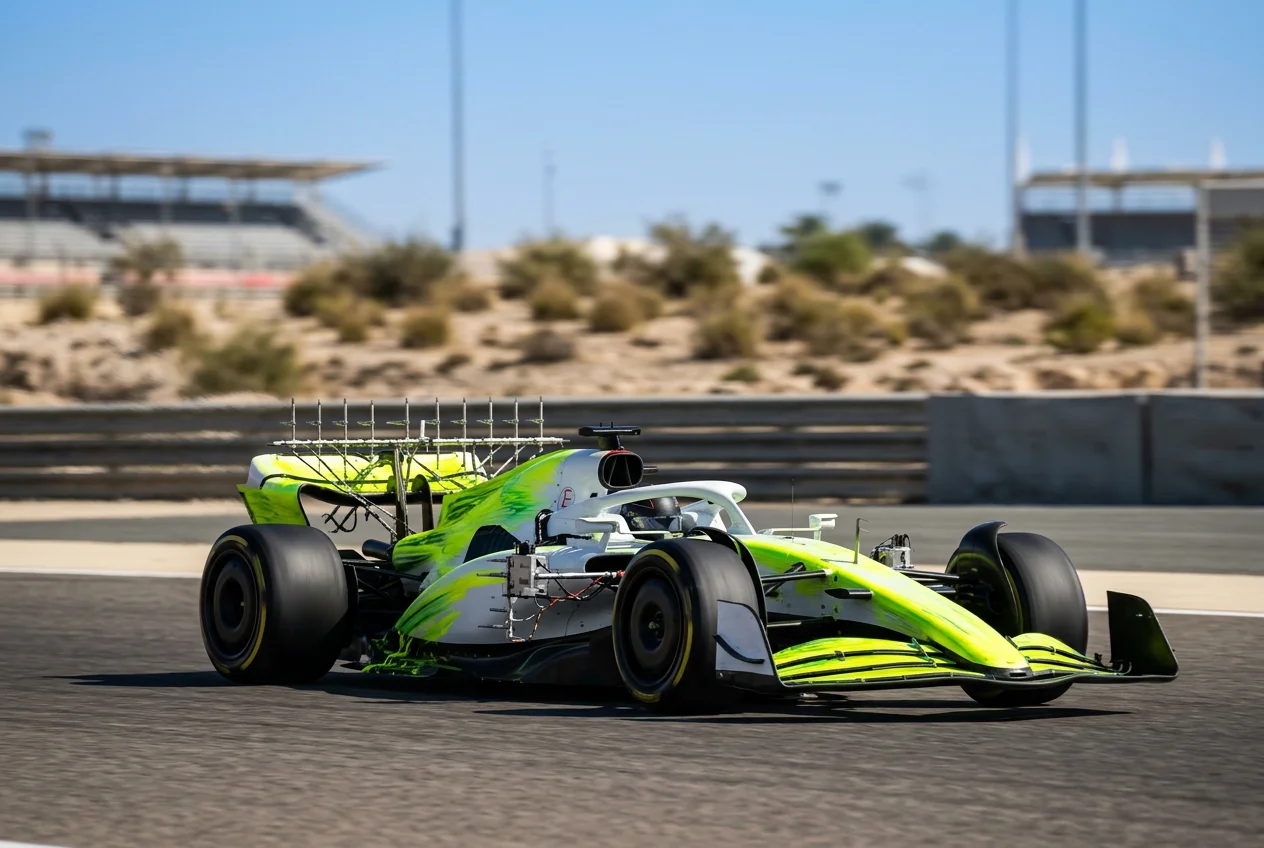
The three days that move ante-post lines and shouldn’t
Pre-season testing in Bahrain is the most over-interpreted period in the F1 betting calendar. The combination of limited public information, intense fan attention, and a betting market hungry for any new data point produces price movement that’s often disconnected from genuine predictive signal. My consistent rule for ante-post positions across multiple seasons has been to ignore the testing-week price movement and either hold pre-testing positions through it or take new positions only after the first race of the season has produced actual race data.
The 2026 testing window is particularly susceptible to over-interpretation because the regulatory reset has made every input variable new. Fred Vasseur, who runs Ferrari, framed the operational scale: “the biggest challenge is probably that we are starting from scratch on everything — new tyres, new fuel, new engine, new chassis, new sporting regulations — new everything. It’s quite challenging.” When every component is new, the signal-to-noise ratio in testing data is structurally lower than in a settled-regulation year. Testing-time variables that would normally tell you something about competitive order tell you less because the variables themselves are all simultaneously novel.
That doesn’t mean testing is worthless. It means the information you can actually extract from testing is narrower and more specific than the broad headline reads that drive most public attention. Understanding the difference is the foundation of any disciplined approach to ante-post betting around the testing period.
See also: f1 bet for pre-season and in-season coverage.
What testing actually shows and what it doesn’t
Pre-season testing produces three types of genuinely useful information for a careful betting observer. The first is reliability data. Cars that consistently break down or fail to complete planned mileage during testing are signalling structural reliability issues that typically persist into the opening races. The second is fundamental car-fit data — whether the car appears to be running cleanly through the track sections relevant to performance, with the driver able to extract pace without obvious balance issues. The third is the broad order of magnitude of competitive separation — whether the field appears to be tightly packed or widely spread.
What testing does not produce is reliable pace data. Every team runs different fuel loads, different engine modes, different aero specifications, and different programme objectives during testing. A team running fast lap times on Wednesday may be running a low-fuel single-lap demonstration; the same team running slow lap times on Thursday may be running a high-fuel race simulation. The headline lap time on the timing screen is therefore almost meaningless without knowledge of the underlying programme conditions — and that knowledge is typically not public.
The 2026 testing reads are particularly muddy because the new power unit architecture means even the relationships between engine mode and lap time are different. The MGU-K Override mode at 350 kW deploys differently from previous specifications, the energy recovery cycle works on different timing, and the fuel consumption patterns don’t follow the historical mappings. Teams running testing programmes can produce timesheet positions that don’t correlate with their underlying competitive position in any predictable way.
The mechanical implication for betting is to treat testing timesheet positions with scepticism, to weight reliability observations more than pace observations, and to wait for the first race-weekend FP3 long-run data before adjusting any meaningful ante-post position. The patient approach loses some pre-race optionality but avoids the larger losses that come from acting on noisy data.
The 2026-specific noise and why it matters more
The structural noise in 2026 testing data is larger than in any recent season I can remember tracking. The 50/50 hybrid power unit split means electrical energy management is a much larger fraction of total performance than under the previous regulations. Teams that have invested heavily in electrical strategy may show better testing pace simply because they’re running their electrical systems more aggressively, without that necessarily reflecting their actual race-day performance ceiling.
The new tyre compounds add another layer of testing-data muddiness. Pirelli has introduced compounds adapted to the new car designs, and the relationships between compound choice, lap time, and degradation pattern are not yet well understood across the field. Testing data on tyre behaviour is therefore inherently provisional, and ante-post pricing built on testing tyre observations carries unusual model risk.
The MGU-K Override at 350 kW is another testing-period variable that produces misleading reads. The override is active up to 337 kilometres per hour and can be deployed in defined race scenarios. During testing, teams can choose to deploy or hold the override depending on their programme objectives. A car running aggressive override deployment in testing shows faster top-speed numbers; a car holding override deployment shows slower numbers. Neither pattern necessarily reflects the race-day performance of the cars under actual racing conditions.
The chassis aero changes — including ground-effect adjustments and bodywork rules different from the 2022-2025 era — make even the fundamental cornering pace numbers harder to read. Cars that look competitive through fast corners in testing may not maintain that pace in race conditions; cars that look slow through fast corners in testing may have programme reasons for running conservatively that don’t reflect their actual ceiling.
The decision framework: bet or wait
The practical decision framework I use for ante-post positions around pre-season testing has two anchors. The first is the pre-testing line. Any position I’d want to take based on the off-season picture — driver moves, team upgrade programmes, regulatory adaptation expectations — should be taken before testing starts, because testing-driven price moves will typically only shorten the line on any genuine value position.
The second anchor is the post-first-race line. After the season opener produces actual race data, the operators have meaningful information to update their pricing models. The post-first-race line is structurally more informative than the post-testing line, and positions taken at that point have more genuine pricing reliability than positions taken during the testing week itself.
The middle period — between the end of testing and the first race — is where the most volatile and least informative pricing happens. Operators have updated their models on testing data of limited reliability, and the lines have moved accordingly. Punters who take positions during this window are typically buying noise rather than signal, and the variance of those positions is structurally higher than positions taken either earlier or later.
The exception is when a specific testing observation has clearly shifted the underlying probability. A team whose car has demonstrably failed to complete planned mileage across the three testing days, with multiple separate reliability issues, has had its title chances genuinely damaged. The operator’s price on that team for the championship should drift, and if the price hasn’t moved as much as the actual probability shift warrants, the fade position is legitimate. But these clear cases are rare. Most testing observations are not clear enough to justify position changes.
The first three races and what they should tell you
The pricing window that matters most for serious ante-post adjustment is the first three races of the season. By the end of the third race, the championship picture has clarified enough to reduce the worst pre-season noise without yet being fully reflected in operator pricing. Teams that have demonstrated genuine pace across diverse circuit types — typically the opening run includes a permanent circuit, a street circuit, and one mixed-condition venue — have shown adaptive performance that points to championship contention.
The same period is when the genuine post-testing signal emerges. A team that looked impressive in testing but stumbles across three races has had its testing read invalidated; a team that looked struggling in testing but produces strong race results has had its testing read disconfirmed. The first three races are the genuine source of post-reset competitive information, not the testing data that preceded them.
The line movement across the first three races tends to be larger than across any other equivalent period of the season. Operators are updating their pricing models in real time as actual race data accumulates, and the dispersion between operators is correspondingly wider than in steady-state mid-season pricing. The line-shopping discipline applied to ante-post positions during this window is particularly valuable because the operator divergence is largest.
The mechanical workflow I use is to hold any pre-testing ante-post position through the testing window without adjustment, to take no new positions during the testing-to-first-race gap, and then to assess after race three whether the championship picture justifies adding to existing positions or taking new ones. The discipline reduces the per-decision noise exposure and concentrates position changes on the periods where the data quality justifies them.
The broader practical question of how the modern UK F1 betting environment actually operates — the apps, the features, the operator dispersion patterns — is what shapes the practical interface through which all these ante-post decisions get implemented, and the dedicated picture of what to look for in UK F1 betting apps beyond the marketing is the practical companion to the strategic content covered here.
See also: know your obligations with our F1 betting tax UK explainer.
Pre-season testing questions UK punters ask
Should I bet drivers" title before or after pre-season testing?
The cleaner discipline is to take any pre-season ante-post position before testing starts, based on the off-season picture, and to hold that position through the testing week without adjustment. The testing-to-first-race gap is the noisiest pricing window of the entire calendar, with operator lines moving based on data of limited reliability. The next clean window for new positions is after race three, when actual race data has clarified the championship picture enough to justify adjusting positions or adding new ones with meaningful confidence.
Why do bookmakers move odds during testing if it"s unreliable?
Because public attention and trading volume both spike during testing, and operators have to respond to the flow of money into the markets even when the underlying signal is weak. Operator pricing models do update on testing data, but they apply meaningful uncertainty discounts to those updates. The visible line movement reflects both the data updates and the operator"s response to incoming bet volume, which can push prices in directions that don"t fully reflect the underlying probability shift. Treating those moves with scepticism is part of the line-shopping discipline that distinguishes patient ante-post punters from reactive ones.
