
 Available in US
British Grand Prix Betting: Silverstone Markets, Home Driver Premium and Value Spots
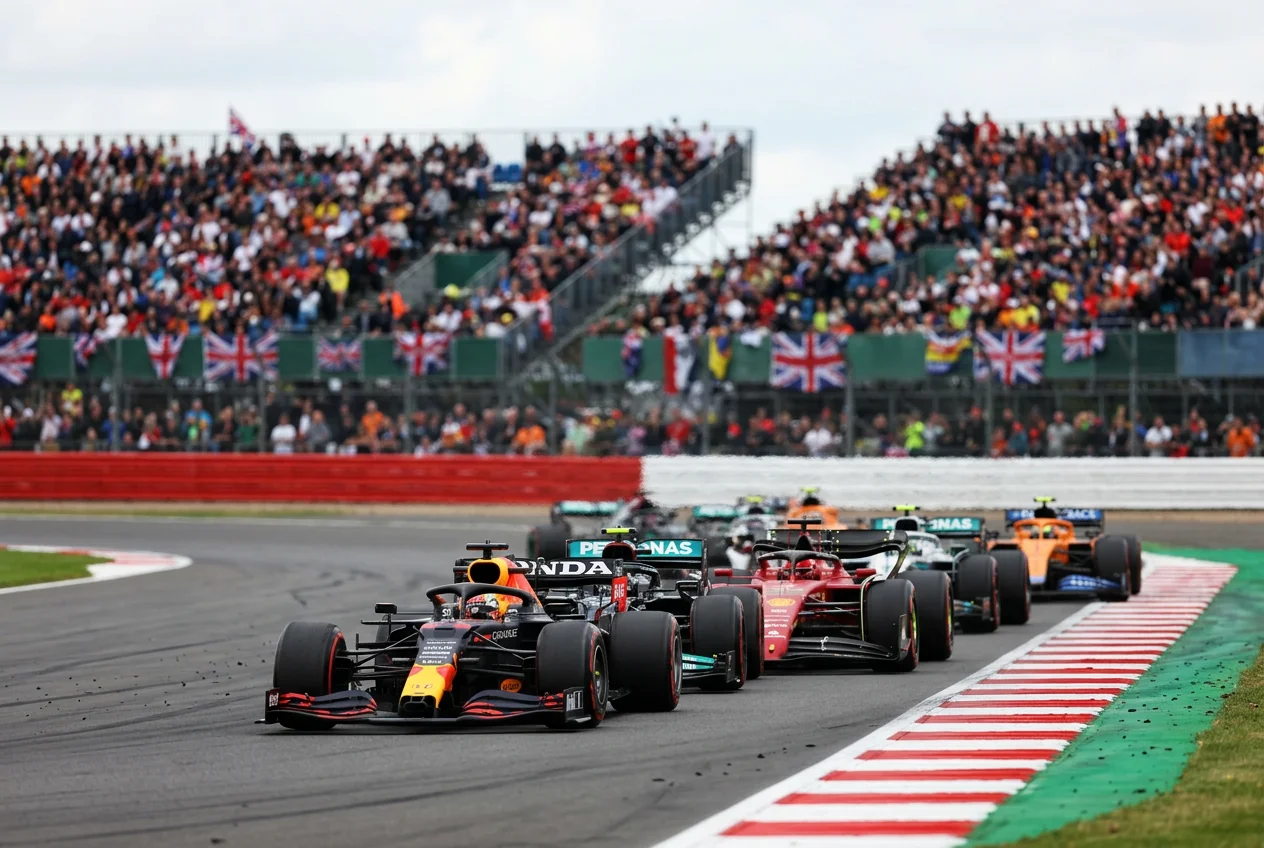
The most emotional weekend of the British calendar
I have a personal rule for Silverstone weekend: I cap my exposure at half what I’d put on any other round. Not because the racing is bad — it’s some of the best the calendar offers — but because the British Grand Prix is the one round of the year where my own bias is heaviest. Eight seasons of trading these races and I still catch myself adding a quarter unit to the home favourite without a single statistical justification.
That bias isn’t unique to me. The 2025 British GP drew 500 000 spectators across the weekend — a new Silverstone record, with 168 000 on race day alone. Sky’s coverage that summer was one of the contributors to the 162 million viewer hours the broadcaster logged across the 2025 season. The combination of British drivers on the grid, home crowd, and saturated UK media coverage produces a measurable price distortion every July, and the market knows it. Operators front-load the home-driver odds with extra public-money expectation, and the value gets squeezed out before pole position is even decided.
That’s the lens for this guide. Silverstone is the round where careful UK punters fade public money, not chase it. Everything below is built around that reality.
See also: f1 bet for Grand Prix previews and race-day tips.
What Silverstone actually rewards on the stopwatch
The simplest way to think about Silverstone is high commitment. Maggotts and Becketts is one of the fastest direction-change sequences on the calendar, and Copse is a flat-out right-hander that punishes any sniff of understeer. A car that bleeds laptime through fast direction changes has nowhere to hide here, and the timing sheets across the weekend will say so clearly by the end of FP2.
The wind is the underrated variable. Silverstone sits on a Northamptonshire airfield, exposed in every compass direction, and crosswinds at Stowe routinely shift driver confidence between sessions. If FP3 runs in a headwind down the Hangar Straight and Sunday delivers a tailwind, the relative grid order can rearrange more than the raw lap deltas suggest. I treat any large practice-to-quali gap as a wind-signature problem before I treat it as a setup problem.
Traction zones matter too, in a less obvious way. Vale and Club are slower than they look on TV, and the cars that put power down cleanly out of Club consistently take a tenth or two of margin per lap. That gives the front-row qualifier a much bigger raw advantage at Silverstone than at, say, Spa, where slipstream blunts the pole premium. Pole at Silverstone is worth backing more confidently in race-winner conversion terms than at a typical European round.
The home driver premium and how to fade it cleanly
Every British driver on the grid attracts a price shorter than their cold form deserves at Silverstone. I’ve watched it happen with Hamilton, Russell, Norris, and any junior on a one-off — the moment they have “Northamptonshire local” attached to their name on the broadcast graphic, the win and podium markets contract by something like five to eight percent against neutral expectation.
The fade isn’t ideological. It works because the public-money inflow is one-directional. On the Friday before the race, the books receive a thick wedge of low-stake patriotic bets across podium, top-six, top-British-driver, and outright. Operators respond by shortening the relevant prices and lengthening the foreign drivers’ lines to balance liability. That creates an arbitrage window — small, but real — for anyone willing to back the non-British contender at slightly inflated odds.
The cleanest expression of this in my own betting is the head-to-head market. Take any British-versus-non-British teammate H2H and you’ll often find a price difference of seven to twelve percent across UK operators on Silverstone weekend, where in Barcelona or Imola the same H2H would be priced flat. Line shopping is mandatory here. The dispersion is wider on this round than any other I’ve tracked.
One caveat worth saying out loud: this is a tendency, not a guarantee. A British driver in genuine race-winning form deserves their short price. The discipline is recognising when the price is short because the driver is on form, versus when the price is short because the home flag is hanging over their head. The difference shows up in FP3 long-run pace. If a British contender’s long-run pace matches their team’s championship-fight rivals, the price is honest. If they’re two tenths off across a 12-lap stint and still priced as a podium favourite, that’s the public-money premium and that’s what you fade.
British summer weather and the strategy implications
Silverstone weather has its own folklore, and most of it is justified. The 2008 monsoon, the 2020 dry-into-wet flip, the 2023 wet quali — these aren’t outliers, they’re a feature of running a Grand Prix in early July on an exposed Midlands site. Pre-race weather reads at Silverstone are worth more than at almost any other European round.
The two markets that move hardest on weather here are the race winner and the safety car. Race-winner pricing tightens dramatically if rain becomes likely, because the field reshuffle that wet conditions cause favours specific drivers and machinery profiles. The safety car line moves in lockstep, because crashes at Stowe in the wet are a structural feature, not a freak event. If my Saturday-evening forecast model shows above-40% rain probability for the Sunday race window, I take pre-race lines aggressively before they retighten on Sunday morning.
The strategy market also opens up. UK operators that offer “one-stop yes/no” or “tyre compound at the flag” pricing leave both sides looking fair in dry expectation. Once weather enters the model, one-stop becomes substantially more likely in mixed conditions because of mandatory tyre-change rule plays under safety car windows. Backing one-stop on a forecast wet race at Silverstone has been one of my more consistent edges over the past four seasons.
The markets that move with the weekend
Three markets earn most of my Silverstone book, and they’re not the obvious ones. Race winner is the price-discovery market — the one operators sweat over and price closest to fair. I don’t play it heavily because the margin is razor-thin and the public-money skew is hardest to fade there.
Top British driver is more interesting. The market is a curiosity for casual punters and a serious value zone for anyone reading the timing sheets. With three or four British drivers on the grid in most modern seasons, the implied probabilities don’t always sum cleanly. Cross-operator dispersion on this market is among the widest I track all season — well within the 5-15% range that defines the broader F1 betting landscape.
Podium finish for a mid-pack British driver is the third option, and the most common bet I’ll actually place. The combination of weather variance, home crowd lift in qualifying, and the structural chaos potential of Silverstone in damp conditions creates real opportunities for a fifth-row qualifier to convert to a third place at 18/1 or longer. It doesn’t land often, but the implied probability is far enough below the historical base rate at Silverstone in mixed weather that the EV holds up over a long enough sample.
Fastest lap is the one I’d skip for British GP specifically. Silverstone’s lap times come in clusters, and the bonus-point chase late in the race tends to favour the leader pitting for fresh softs — which is the lowest-edge end of the fastest-lap market across the whole calendar. I save my fastest-lap unit for races like Monaco, where the pole-conversion dynamic shifts the whole pricing structure.
See also: compare teammates with our F1 head-to-head betting breakdown.
How British GP punters get tripped up
Are home favourites overpriced at Silverstone?
Yes — the home-driver premium is one of the most consistent biases in F1 betting. British drivers" race-winner, podium and top-British-driver markets are typically five to eight percent shorter than their cold form deserves at Silverstone. The cleanest fade is a teammate head-to-head, where the price gap between UK operators on this round is meaningfully wider than at any other European venue.
Is the British GP a good outright reset round?
It can be, particularly when wet conditions create a result that breaks recent grid order. Silverstone sits in the middle of the season, around the championship"s natural reassessment point, and a chaotic British result can justify hedging or adding to existing drivers" or constructors" title positions. Outside of weather variance, treat it as a high-quality data point rather than a turning point on its own.
