
 Available in US
F1 Pole Position Betting: Where Saturday Beats Sunday for Value
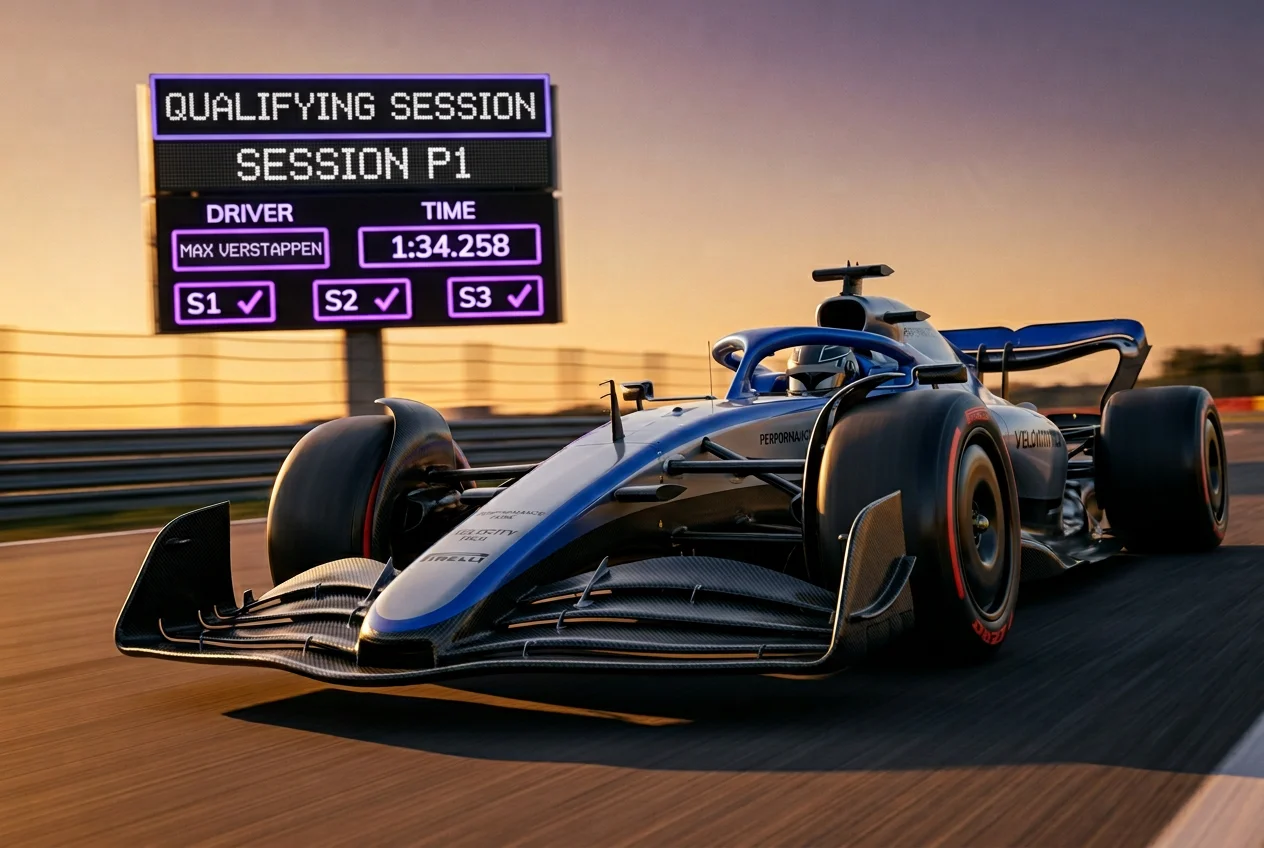
The 90-second decision that pays more clearly than 90 minutes of race
Across the seasons I’ve tracked carefully, qualifying betting has been more profitable per bet than race betting by a meaningful margin. The reasons are structural, not coincidental. Qualifying is shorter, simpler, less affected by external variables, and more directly tied to underlying car-and-driver pace than any race-day market. The pole position bet specifically is one of the cleanest pieces of value in F1 betting if you understand what you’re actually buying and where the price gaps appear.
The audience picture has shifted in step with the value picture. F1 TV Qualifying Live subscriptions grew 22.8% in 2025, which reflects a viewer base that’s increasingly engaged with the Saturday session as a standalone event rather than as a curtain-raiser for Sunday. The growth means operators are taking qualifying markets more seriously than they used to, and the pricing on pole position bets is correspondingly sharper than it was three or four years ago. But “sharper” doesn’t mean “perfect”, and the structural value opportunities haven’t gone away.
The pole position market is the headline qualifying bet: which driver will set the fastest time in the final qualifying session and start the race from first on the grid. The mechanics are clean, the settlement is fast, and the underlying signal — single-lap pace on low fuel, fresh tyres — is one of the purest performance metrics in motorsport.
See also: f1 bet for qualifying and Saturday market analysis.
How Q3 actually works and why it matters for pricing
The qualifying format that determines pole position is the three-segment knockout system that’s been substantially stable since 2006. Q1 features the full grid, with the slowest five cars eliminated at the end. Q2 features the surviving 15 cars, with another five eliminated. Q3 features the surviving 10 cars, who compete for pole over a final segment of approximately 12 minutes.
The structural quirk that matters for pole betting is the Q3 tyre allocation. Drivers reaching Q3 typically have only one or two sets of new soft tyres remaining for the session — fewer than they would have had in Q2 — and the tyre management dynamics produce specific patterns. Most teams run two qualifying laps in Q3, with the first run as an exploratory lap to identify session conditions and the second run as the genuine attempt at pole.
The implication for pole betting is that pre-Q3 implied probabilities don’t always reflect what happens once Q3 actually starts. Drivers who set strong times in Q1 and Q2 may struggle in Q3 if their tyre allocation forces them into a single attempt, while drivers who’d been quietly conservative through the earlier segments can produce stronger Q3 times because they’ve preserved tyre resources. Operator pole position pricing pre-Q3 may not fully capture this allocation effect.
The other structural variable is track evolution during the Q3 session. Q3 typically runs in the last 20 minutes of the qualifying hour, and track conditions change meaningfully across that period. A driver completing their final flying lap closer to the chequered flag often has the benefit of a more rubbered-in surface and is structurally favoured for setting the session’s fastest time. Operators that don’t fully model this end-of-session bias produce pricing that under-rewards drivers known to time their final attempts late.
Pole versus race winner conversion and what it tells you
The relationship between pole position and race victory is one of the most studied questions in F1 betting, and the conversion rate matters because it tells you how to value pole position as a standalone bet versus as part of a broader strategy.
The historical conversion rate of pole to race win varies significantly by circuit. At Monaco, the conversion rate is exceptionally high — typically above 60% across the past decade — because the circuit’s geometry makes overtaking extremely difficult and pole position effectively becomes a race-leading lock for most of the race. At Bahrain, the conversion rate is much lower — typically below 35% — because the circuit produces multiple realistic overtaking opportunities and pole position is more easily lost during the opening stint.
The implication for betting is that pole position pricing should be considered separately from race winner pricing at conversion-low circuits, and as a partial proxy for race winner pricing at conversion-high circuits. A driver priced shorter on pole than on race winner at Bahrain may genuinely be the pole favourite without being the race favourite. A driver priced similarly on pole and race winner at Monaco is being priced as essentially the same outcome twice — which they functionally are.
The line-shopping implication is that operators sometimes inconsistently price the relationship between pole and race winner. The 5-to-15 percent dispersion typical of F1 markets sometimes shows up specifically in the pole-to-race spread — the difference between a driver’s pole price and their race winner price — and value can appear on one side of the spread but not the other at the same operator. Checking both prices at multiple operators rather than just the headline pole price is the line-shopping discipline that captures this asymmetry.
Pole head-to-head and where the value sits
The pole position head-to-head market — paired comparisons of two drivers’ qualifying outcomes — is one of the sharpest sub-markets in F1 betting, for the same structural reasons that make general qualifying H2H sharper than race H2H. The 90-second decision window is short enough to remove most strategic variables, and the timing screen is the final arbiter of who’s faster.
The teammate pole H2H is the cleanest version. Two drivers in the same car, on the same tyres, with the same fuel load, racing each other for the team’s grid order. The variable that’s left is the driver. The implied probability on teammate pole H2H is usually within 5-8% of fair value across major UK operators, which is among the tightest pricing in any F1 market — but the dispersion of 5-15% that exists between operators on F1 markets generally still produces line-shopping opportunities even on these tight lines.
Cross-team pole H2H is more variable. The matchups are paired by operators based on perceived grid-position similarity, and the underlying signal is harder to price. A pairing of a mid-grid driver against a fast-team backup driver may produce a meaningful pricing asymmetry if the operator hasn’t fully captured the relative qualifying-pace profiles. Cross-team pole H2H is one of the markets where careful preparation work — reading FP3 long-run pace within each team and projecting it forward to qualifying — produces consistent edge over time.
The pole H2H markets are also the ones where the broader category of qualifying-related betting fits cleanly into a disciplined staking plan. The per-bet variance is high enough to require modest position sizes, but the per-bet edge is sufficient to justify regular participation. Across a 24-race season, a careful UK punter might place 50 to 80 pole H2H bets in total, with the per-bet stake calibrated to keep the total qualifying-market exposure within a defined bankroll fraction.
Track-specific pole patterns to know
Different circuits produce different pole position betting dynamics, and understanding the circuit-specific patterns is essential for any pole-focused strategy.
Monaco produces the highest-stakes pole position market on the calendar because the conversion rate is so high. The implied probability on pole position at Monaco is also typically the highest single-circuit probability on the favourite, meaning the price is short and the absolute value gap is small. The line-shopping benefit at Monaco is correspondingly limited compared to circuits where the favourites are less clear, but the directional importance of the Monaco pole bet within a broader strategy is significant.
Spa and Monza produce variable pole pricing because slipstream effects on the long straights add a strategic dimension that’s hard to model. Teams that organise tow trains in Q3 — coordinated runs where one driver provides slipstream benefit to another — can produce pole-setting laps that aren’t predictable from individual driver pace data. Operators that don’t model the tow effect well sometimes produce pricing asymmetries on these circuits.
Singapore and Baku produce pole pricing that’s affected by their high-impact qualifying nature. Both circuits have walls close to the racing line and produce qualifying sessions where one mistake — clipping a wall, locking up into a braking zone — ends a driver’s pole chances even when their pace would otherwise justify a strong attempt. Operators sometimes underweight this incident risk in pre-session pricing, which can be a value spot for fading favourites in pole markets at these circuits.
The natural extension of pole position betting into the broader race-result market is what gives the podium finish market its own specific settlement rules and value patterns worth understanding, which is the closely related market that pole-focused punters typically also participate in.
See also: compare app features for quick pole bets with our F1 betting apps UK review.
Pole position questions UK punters ask
Does pole position pay out on a grid penalty case?
The pole position market in UK F1 betting settles on the driver who sets the fastest qualifying time in Q3, not on the driver who actually starts from first on the grid. A driver who sets the fastest time but is then moved back on the grid by a penalty — typically a power unit or gearbox penalty — still wins the pole position market for settlement purposes. The "front row of the grid" or "starts first" markets, where they"re offered separately, settle differently and on the actual grid position. Always check which market you"ve selected when staking around races where grid penalty risk is elevated.
Is pole head-to-head sharper than race head-to-head?
Yes, structurally. Pole H2H removes most of the race-day variables — strategy calls, safety car interventions, weather changes, tyre management decisions — that add variance to race H2H markets. The underlying signal is closer to pure single-lap pace, and operators price it correspondingly tighter. The 5-to-15 percent dispersion typical of F1 markets still produces line-shopping opportunities even on these tight lines, and the per-bet variance is lower than on race H2H, which makes pole H2H a more consistent edge across a long season.
